
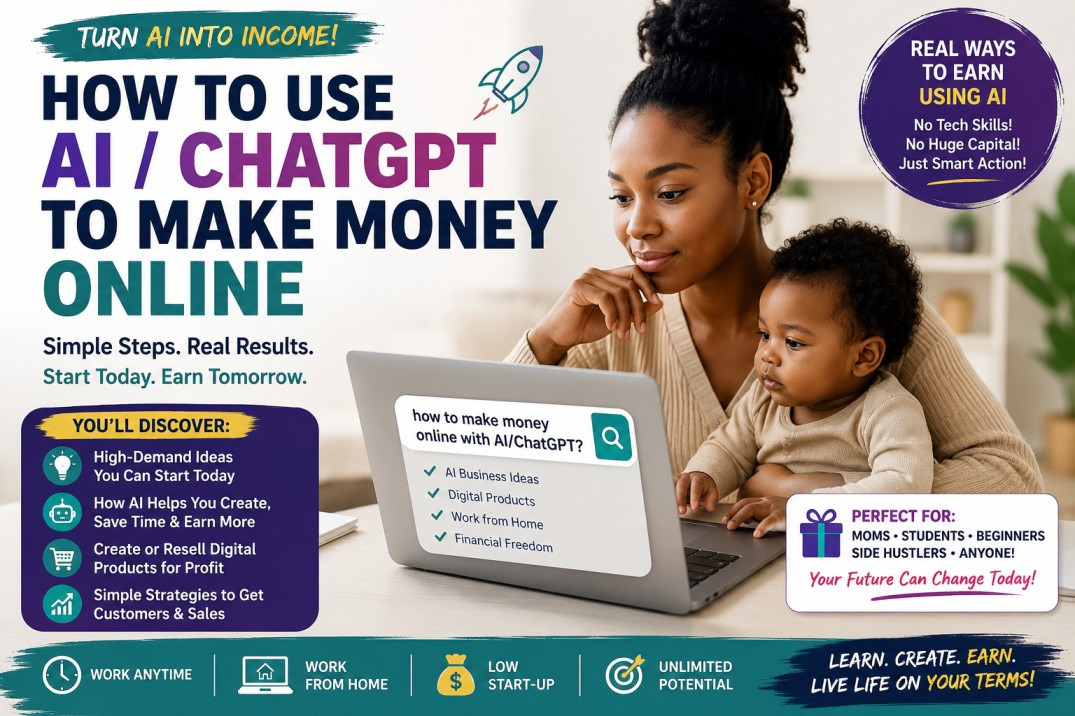
If you have ever asked “How can I use AI to make money?”, “How can I make money with ChatGPT?”, or “What can I sell using AI?”, the simplest answer is this:
Use AI to help you create, package and sell something valuable that solves a real problem.
ChatGPT and other AI tools can help you brainstorm ideas, research a topic, write and improve content, organize information, create marketing material, analyse information and accelerate many tasks that previously required specialist skills.
You do not necessarily need to become a programmer or AI expert.
For many beginners, one of the easiest models to understand is:
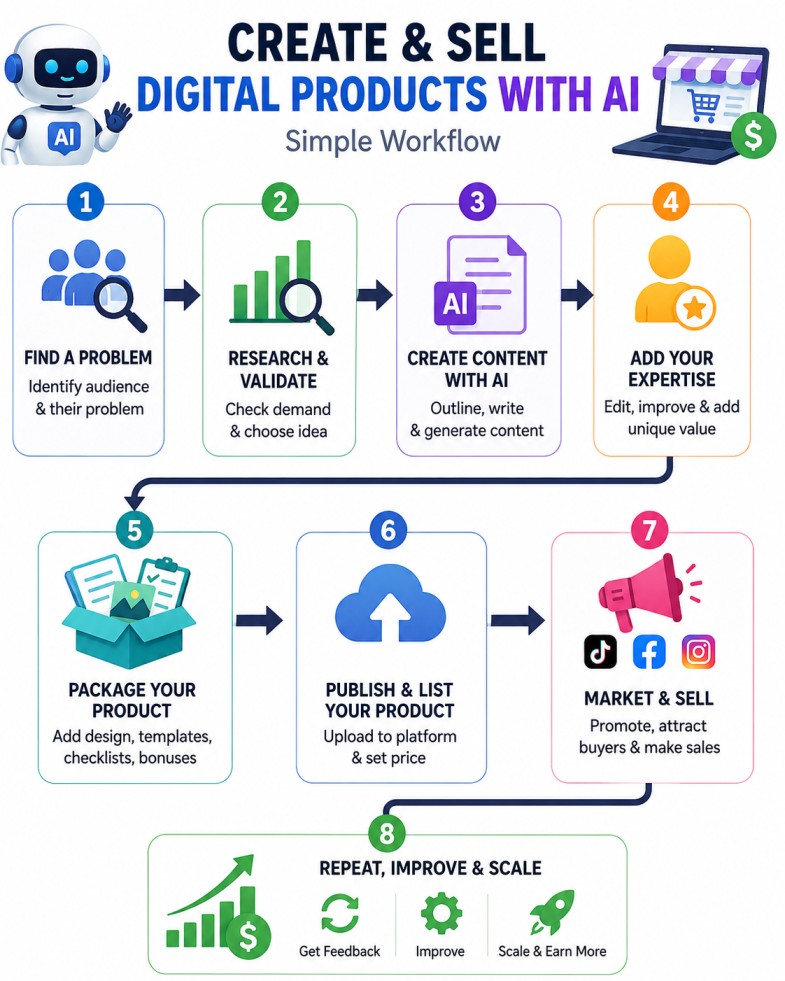
Find a problem → use AI to create a solution → package it as a digital product → sell it online.
And if you do not want to create a product from scratch, another option is to legally resell an existing digital product that includes appropriate resale rights.
This guide explains both approaches step by step.
You can use ChatGPT and other AI tools to help you make money by:
Reselling digital products with Master Resell Rights
Offering AI-assisted freelance services
Creating online courses and micro-courses
Creating educational tutorials and guides
Managing social media for businesses
Creating content for businesses
Building simple websites or apps
Offering research and virtual-assistant services
Creating videos, YouTube content or social-media channels
For a beginner, creating or reselling useful digital products is particularly attractive because one product can potentially be sold repeatedly without manufacturing or shipping physical inventory.
A digital product is something a customer purchases and receives electronically.
Examples include:
Video tutorials
Audio lessons
PDF guides
Checklists
Templates
Worksheets
Study notes
Revision guides
Prompt packs
Business documents
Digital planners
Stock graphics
Software
Simple apps
Instead of asking:
“How can ChatGPT give me money?”
Ask:
“What problem can ChatGPT help me solve for someone who is willing to pay for the solution?”
That shift is important.
ChatGPT does not magically generate income. It can help you research, create and market the asset that generates the income.
Do not begin by telling ChatGPT:
“Write me an ebook.”
First decide who you want to help and what they are struggling with.
For example:
A KCSE student might be searching for:
KCSE mathematics revision questions
A small business owner might search for:
How to use ChatGPT for my business
How to create social media content
How to find customers online
A parent might search for:
Positive parenting tips
Toddler routine planner
How to help a child study
Family budgeting template
A job seeker might need:
CV templates
Interview preparation questions
LinkedIn optimisation
Job application checklists
These problems can become digital products.
Instead of creating a generic ebook called:
“Guide to Education”
create something highly specific such as:
“30-Day KCSE Revision Planner: Daily Study Schedule, AI Prompts and Exam Preparation Checklist.”
Specific products usually communicate their value more clearly.
You can use ChatGPT as a brainstorming and research assistant. OpenAI specifically describes ChatGPT as useful for generating ideas, organizing thinking and turning rough concepts into actionable plans.
For example, enter:
I want to create a digital product for university students who want to start making money online. Identify their 20 biggest problems, questions and fears. Group them according to urgency and suggest a digital product that could solve each problem.
Then ask:
From these ideas, identify products that a beginner could create within one to three days using AI.
You could receive ideas such as:
Student Online Income Starter Guide
50 AI Prompts for University Students
Student Freelancing Starter Kit
Internship Application Toolkit
AI Study Planner
Small Business Starter Templates
Now you have something much closer to an actual business opportunity.
Do not create 100 pages before finding out whether anybody needs them.
Search Google, Google Trends, YouTube, TikTok, Reddit, forums, marketplaces and AI platforms for questions people repeatedly ask.
Look for phrases such as:
“How do I…”
“Best way to…”
“Template for…”
“Checklist for…”
“Beginner guide to…”
“How can I…”
“Why is…”
“What should I…”
Questions are potential product opportunities.
You can then give your research to ChatGPT and ask:
These are questions people are asking about poultry farming in Kenya. Group them into themes and recommend one digital product that could answer the largest number of high-intent questions.
AI helps with the analysis.
Human demand determines what you should sell.
Once you identify the problem, create the solution.
Suppose you decide to create:
Instead of generating the whole guide in one prompt, build it systematically.
Ask ChatGPT:
Create a practical outline for a beginner's poultry farming guide in Kenya. The reader should be able to go from planning their farm to purchasing chicks, brooding, feeding, disease prevention, record keeping and selling chickens profitably.
Review the outline.
Then generate each section separately.
For example:
Write Chapter 3: Preparing a Brooder. Use simple language. Include equipment required, approximate planning considerations, common beginner mistakes, a checklist and practical action steps.
Then improve it using your own expertise, interviews, examples, research or experience.
This final step matters.
Google explicitly recommends creating helpful, reliable, people-first content, rather than publishing content primarily to manipulate search rankings.
AI should therefore accelerate your expertise -not replace quality control.
Raw AI text is not yet a valuable digital product.
Package it.
Add things such as:
A professional cover
Table of contents
Practical examples
Worksheets
Action steps
Checklists
Templates
Frequently asked questions
Resource pages
Quick-reference summaries
For example:
Instead of selling only:
“How to Start Poultry Farming”
offer:
Containing:
40-page beginner guide
Farm startup checklist
Feeding-record template
Vaccination planner
Expense tracker
Profit calculator
20 useful AI prompts for poultry farmers
The perceived usefulness increases because the customer receives an actionable system rather than ordinary information.
Once the product is ready, you need somewhere customers can discover, buy and access it.
One option is Vezill, which currently positions itself as a marketplace for creating, buying, selling and reselling digital products. Its site supports products including eBooks, courses, guides, videos, templates and other downloadable content. See how to upload your digital products on Vezill for free.
A good product page should answer:
What is it? Who is it for? What problem does it solve?What will the buyer receive? What result should the buyer expect? Why should they buy this product rather than search for free information?
Now ask ChatGPT:
Write a high-converting sales description for my Poultry Farming Starter Kit. Target beginner poultry farmers in Kenya. Explain the problems it solves, what's included, who it is for and the practical outcome. Do not exaggerate income claims.
Then create:
Product title
Description
Frequently asked questions
SEO title
Meta description
Social captions
WhatsApp message
TikTok scripts
Email copy
One product can therefore generate an entire marketing campaign using AI assistance.
Imagine Mary is a secondary-school teacher.
She frequently sees students struggling to create revision schedules.
Instead of simply asking ChatGPT how to make money, she turns her existing knowledge into a product.
Students struggle with:
“How do I create an effective revision timetable?”
She asks:
Suggest a simple digital product I could create for KCSE students struggling to organise their revision.
ChatGPT suggests:
The 30-Day KCSE Revision Planner.
She uses AI to help create:
Daily revision timetable
Subject-priority planner
Study checklist
Exam countdown calendar
Weekly review sheet
Memory techniques
50 revision prompts for ChatGPT
As a teacher, Mary reviews the material and adds:
Common mistakes she sees students making
Advice based on classroom experience
Examples of realistic study schedules
Guidance for weak and strong subjects
Now the product contains something AI alone could not provide:
Mary's practical experience.
She turns it into a professionally formatted PDF.
She uploads it to a digital marketplace and creates a product page.
Using ChatGPT, she creates short videos around questions such as:
“How many hours should a KCSE student study every day?”
“Why do I forget everything I revise?”
“How do I create a KCSE timetable?”
At the end of each video she can direct interested students to the full revision planner.
That is a realistic AI business workflow:
Knowledge → AI assistance → digital product → content marketing → customer → sale.
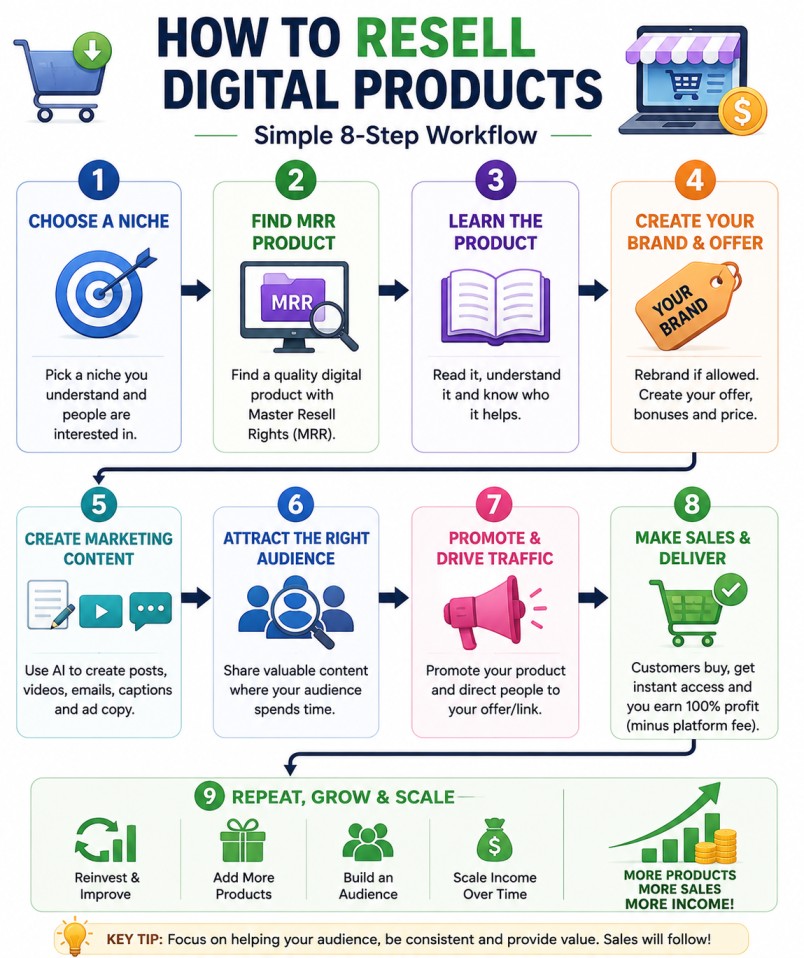
What if you do not want to write an ebook, create a course or build templates? You can consider reselling legally licensed digital products. However, this needs an important qualification:
You cannot simply buy or download somebody else's product and start selling it.
You must have a licence that explicitly permits resale. One model is called Master Resell Rights (MRR).
MRR generally gives the buyer specified rights to resell a digital product according to the licence terms attached to that product.
Vezill, for example, currently lists eligible products with Master Resell Rights that buyers can legally resell under their stated licences.
The process can be extremely simple.
Examples:
AI
Business
Education
Parenting
Career
Productivity
Personal finance
Marketing
Farming
Fitness
Choose something that solves a clear problem.
For example:
How to Study Effectively and Remember More
Read it.
Know what it teaches.
Know who needs it.
Do not market a product you do not understand.
Prompt:
I am selling a study guide that teaches students how to study effectively and remember more. Identify 20 questions potential customers are likely to ask before buying it.
Then ask:
Turn these questions into 30 short TikTok and Instagram video ideas. Each video should answer one question before naturally introducing the guide.
You might receive:
Video 1:
“Why do I forget everything after studying?”
Video 2:
“3 mistakes students make when revising.”
Video 3:
“How to remember what you study.”
Video 4:
“Should you study for five hours straight?”
Each piece of content can lead to the product.
That means ChatGPT becomes your marketing assistant, while the licensed digital product is what you sell.
Both models can work.
Best if you have:
Knowledge
Experience
A skill
Research ability
A useful method
Something original to teach
The advantage is that you control the product and brand.
Best if you want to begin without spending significant time creating a product.
Your main job becomes:
Finding the right customer and marketing the product.
Vezill currently supports both creators and resellers, although reselling requires following the platform's reseller requirements and the specific licence attached to each product.
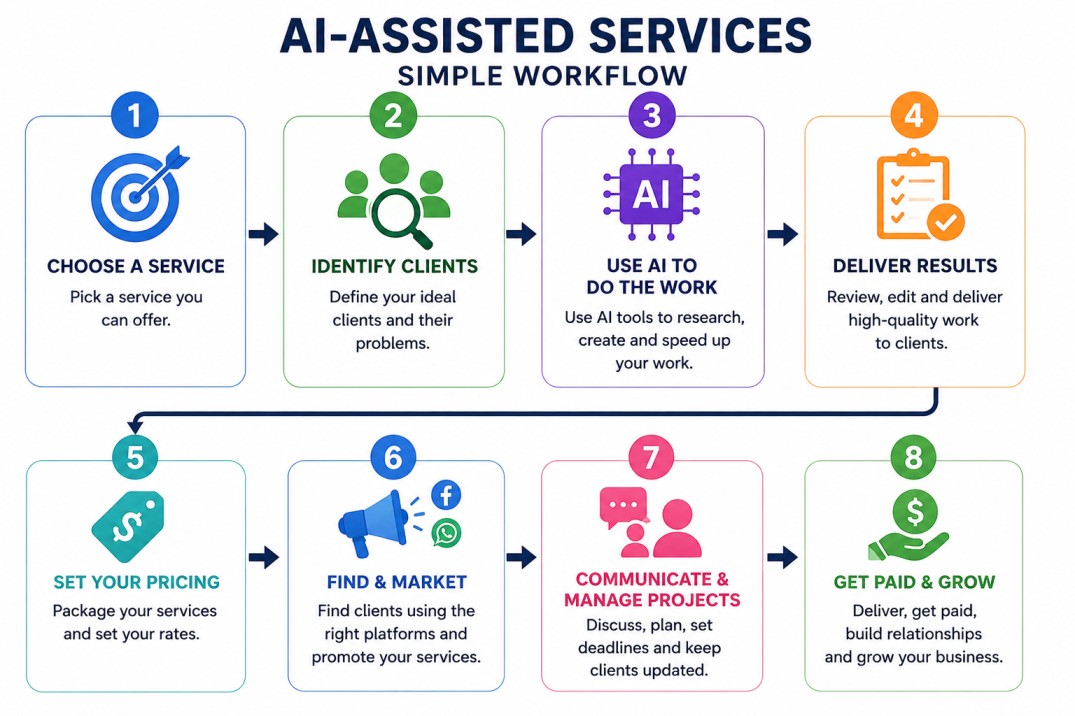
Digital products are not the only option.
You can also sell a service and use ChatGPT to complete portions of the work more efficiently.
Examples include:
A restaurant might need:
Facebook posts
Instagram captions
TikTok ideas
Promotional campaigns
You can use ChatGPT to accelerate brainstorming and drafting.
Help job seekers improve:
CV structure
Professional summaries
Cover letters
Interview preparation
LinkedIn profiles
AI produces a starting point; you customise it around the customer's real experience.
Businesses need:
Website pages
Blog articles
Product descriptions
FAQs
Emails
Advertisements
Writing remains a major work-related use case for ChatGPT.
Businesses may pay somebody to:
Research competitors
Organize customer feedback
Summarize documents
Compare products
Analyse data
Prepare reports
ChatGPT can assist with analysing datasets, spotting patterns, preparing visualisations and communicating findings.
If you know how to perform a useful task, teach somebody else.
You do not necessarily need a 20-hour course.
Create a focused 10-minute to 60-minute micro-course.
Examples:
How to Create a CV With ChatGPT
How to Create Facebook Ads
How to Use Canva for Beginners
How to Create an Ebook With AI
How to Create a Business Budget
How to Use Excel for Small Business
How to Edit TikTok Videos
How to Create a Website With AI
How to Start Poultry Farming
How to Use AI for KCSE Revision
Use ChatGPT to generate:
Course outline
Lesson scripts
Examples
Exercises
Quizzes
Worksheets
Course description
Promotional content
Then record the lessons.
Package the videos as a digital product and sell them here.
Sell them repeatedly.
Another simple digital product is a collection of carefully designed prompts.
Do not create:
“1,000 Random ChatGPT Prompts.”
Instead solve one specific problem.
Examples:
Prompts for:
Lesson planning
Quizzes
Assignments
Student feedback
Revision notes
Prompts for:
Marketing
Customer service
Sales
Business planning
Social media
Prompts for:
CV improvement
Interview practice
Job research
Cover letters
Specificity makes the product more useful and sell them
You can also use ChatGPT to help build an audience.
Choose one niche.
For example:
AI for Small Businesses.
Create:
TikTok videos
YouTube videos
Blog posts
Email newsletters
Facebook posts
ChatGPT can help with:
Content ideas
Research
Outlines
Scripts
Titles
FAQs
The audience can later be monetized through:
Your own digital products
Courses
Services
Sponsorships
Affiliate marketing
Licensed products
This is slower than simply listing a product, but it can create a valuable long-term distribution channel.
For somebody starting from zero, a practical model is:
Example:
University students.
Example:
Finding an internship.
Example:
University Internship Application Toolkit.
Such as:
CV template
Cover-letter template
Internship search checklist
Application tracker
Interview questions
ChatGPT prompts
For example:
“5 mistakes students make when applying for internships”
“How to write an internship CV”
“Tell ChatGPT this before writing your cover letter”
“How to answer: Tell me about yourself”
You are not merely posting advertisements.
You are answering questions potential customers are already asking.
If you want to start rather than continue researching endlessly, follow this plan.
Choose one audience you understand.
Find 20 questions the audience is asking.
Select the problem that could be solved with a digital guide, template, course or toolkit.
Use ChatGPT to help create the first version.
Add your own knowledge, examples, checklists and design.
Create a clear product listing.
Create:
3 TikTok videos
3 Facebook posts
3 Instagram posts
1 WhatsApp promotion
1 useful blog article
Then repeat the marketing process consistently.
Suppose your niche is:
Small businesses in Kenya.
Their problem is:
They do not know how to use AI.
Start with:
50 ChatGPT Prompts for Small Businesses
Then:
How to Use ChatGPT for Your Small Business
Then:
AI Social Media Content Planner
Then:
60-Minute ChatGPT for Business Micro-Course
Then bundle everything into:
Small Business AI Toolkit
One problem can therefore become several digital products.
For many beginners, one of the simplest paths is:
Create a small digital product solving one specific problem and market it to the people already looking for that solution.
If creating from scratch feels difficult, consider legally reselling an eligible product with appropriate resale rights.
Do not start with ten products.
Start with:
One audience.
One problem.
One product.
One marketing channel.
Get your first customer.
Then improve and expand.
You can start many AI-assisted businesses with little upfront capital, but “no money” does not mean no work.
You will still need:
Time
Research
Learning
Product quality
Marketing
Customer service
Consistency
Be wary of claims suggesting that simply typing a prompt into ChatGPT will create automatic passive income. Real-world experiments with AI side hustles consistently point to the need for ongoing effort, creativity and distribution rather than instant returns.
Technically, AI can generate substantial portions of a guide, course outline, workbook or template.
But you should not blindly copy and sell its first response.
A better workflow is:
AI creates → you review → you verify → you improve → you add experience → you package → you sell.
This produces a stronger product and reduces the risk of publishing inaccurate, generic or misleading information.
Some beginner-friendly ideas include:
eBooks
PDF guides
AI prompt packs
Checklists
Study planners
Revision guides
Business templates
Content calendars
Workbooks
Budget planners
Career toolkits
Interview guides
Course notes
Micro-courses
Tutorials
Worksheets
Business plans
Marketing kits
SOP templates
Teacher resources
The best choice is not necessarily the easiest thing AI can generate.
It is the thing your target customer needs badly enough to pay for.
Use AI to help research customer problems, create products or services faster, market them and improve your workflow. Common models include digital products, freelancing, courses, content creation and AI-assisted business services.
One straightforward method is to identify a problem, use ChatGPT to help create a digital solution such as an ebook, guide, template or course, publish it online and promote it to people searching for that solution.
Yes, but the product should be useful, accurate, appropriately licensed and compliant with the rules of the marketplace where you sell it. Human review and added expertise can substantially improve its value.
Only when the licence specifically gives you permission to resell it. Some products come with Master Resell Rights or other resale licences, while ordinary purchases generally do not automatically give you redistribution rights.
Master Resell Rights, commonly shortened to MRR, are licence terms allowing a buyer to resell an eligible digital product according to specified conditions. Always read the licence because permissions can differ between products.
There is no universal “best” option. For someone who prefers creating assets rather than doing client work, digital products are attractive because the same product can be sold repeatedly. For someone who needs quicker validation, AI-assisted freelance services may be easier because you can sell your time and skill before building a full product catalogue.
No. Many AI-assisted income models revolve around writing, education, marketing, research, design, digital products and services rather than software development.
Do not make the process complicated.
Remember:
Problem + AI + Human Expertise + Useful Product + Distribution = Business Opportunity
ChatGPT can make research, writing, brainstorming and production dramatically faster, but customers ultimately pay for results, convenience, knowledge, entertainment or solved problems—not simply because something was created using AI.
If you want the simplest starting point:
Step 1: Choose something you know.
Step 2: Identify a problem people have.
Step 3: Ask ChatGPT to help you design a solution.
Step 4: Turn that solution into a digital product.
Step 5: Publish it on a digital-product marketplace such as Vezill.
Step 6: Use ChatGPT to create educational marketing content.
Step 7: Promote consistently and improve the product based on customer feedback.
If you do not want to create a product, find a properly licensed product with Master Resell Rights, understand it thoroughly and build your business around marketing it to the right audience.
AI does not have to replace your job. It can become the tool that helps you create your first digital business.
Discover more articles you might be interested in
Build a Successful Digital Product Business on Vezill: Create, Market & Sell Online
By Super Admin
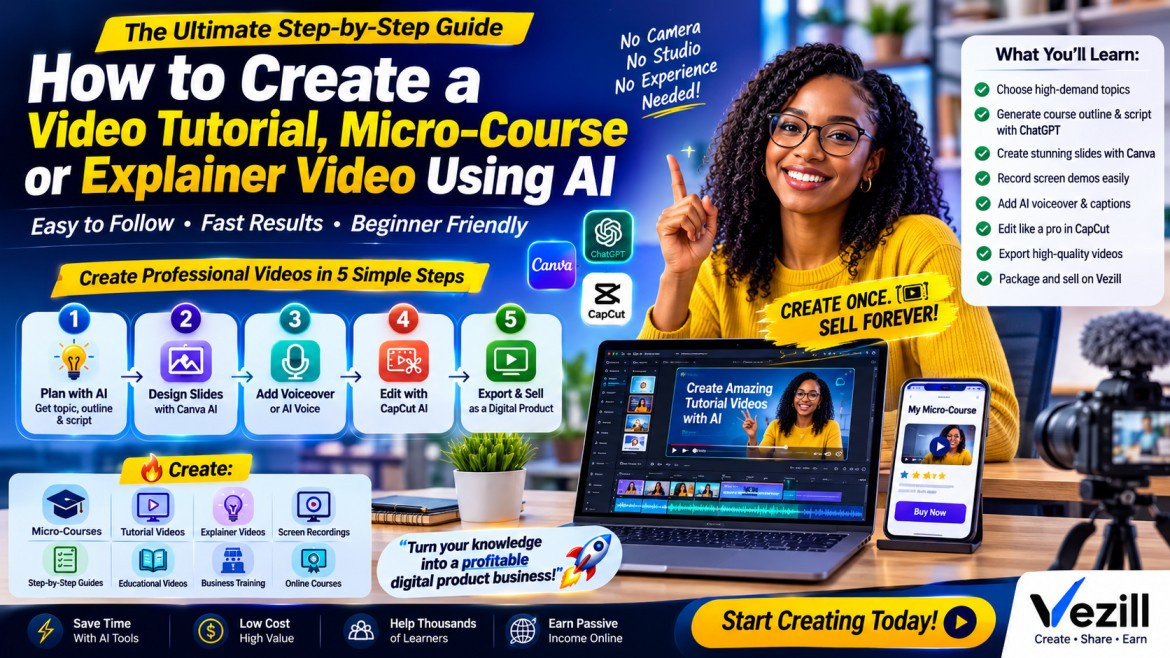
Learn How to Create a Video Tutorial, Micro-Course or Explainer Video Using AI
By Super Admin
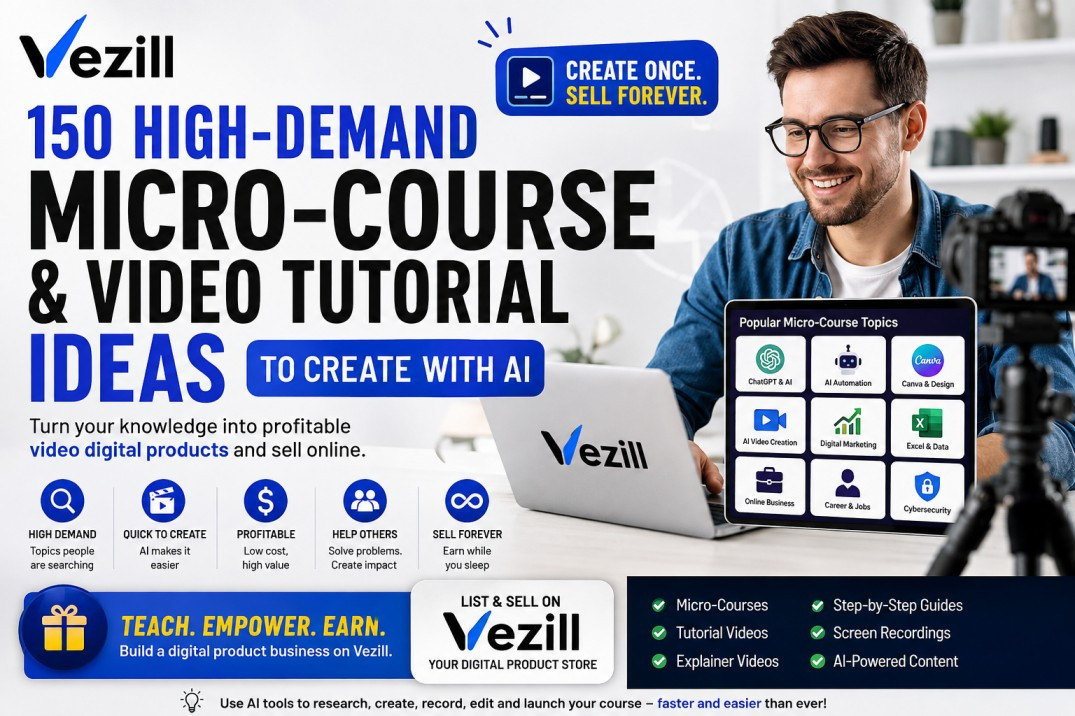
Discover 150 high-demand micro-course, video tutorial and explainer video ideas you can create with AI and sell online as digital products.
By Super Admin
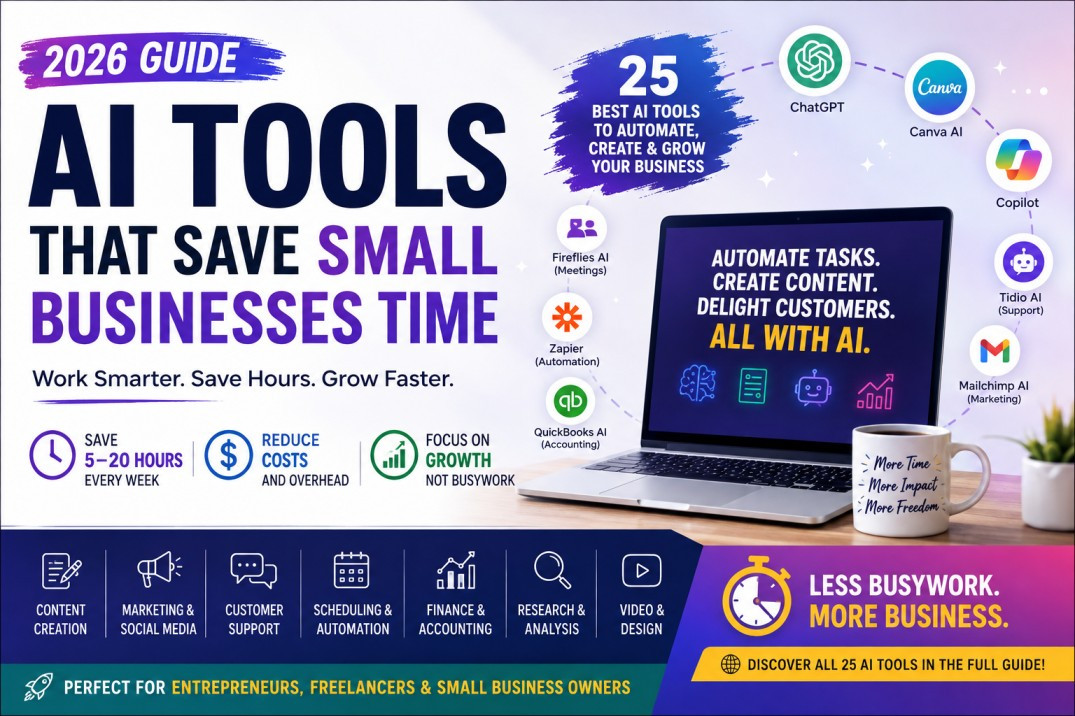
Discover the best AI tools for small businesses that automate marketing, customer support, accounting, content creation, emails, scheduling, and administration.
By Super Admin
Get the updates, on newly released, popular & fast-moving MRR digital products
Up to Top
Comments All
Geoffrey
@geoffrey
This was such a helpful and easy-to-follow read. I really like how it explains that AI isn’t a magic way to make money, but a tool that can help you turn useful ideas and skills into something people actually need. The step-by-step approach makes the whole process feel much less overwhelming, especially for beginners.
September 07,2026 At 10:00 PM
Jesse
@jesse
I like that this focuses on actually using ChatGPT to get things done, rather than just talking about AI in general. Some of the ideas are pretty realistic for someone trying to earn online. Definitely gave me a few things to experiment with.
August 26,2026 At 11:32 PM