
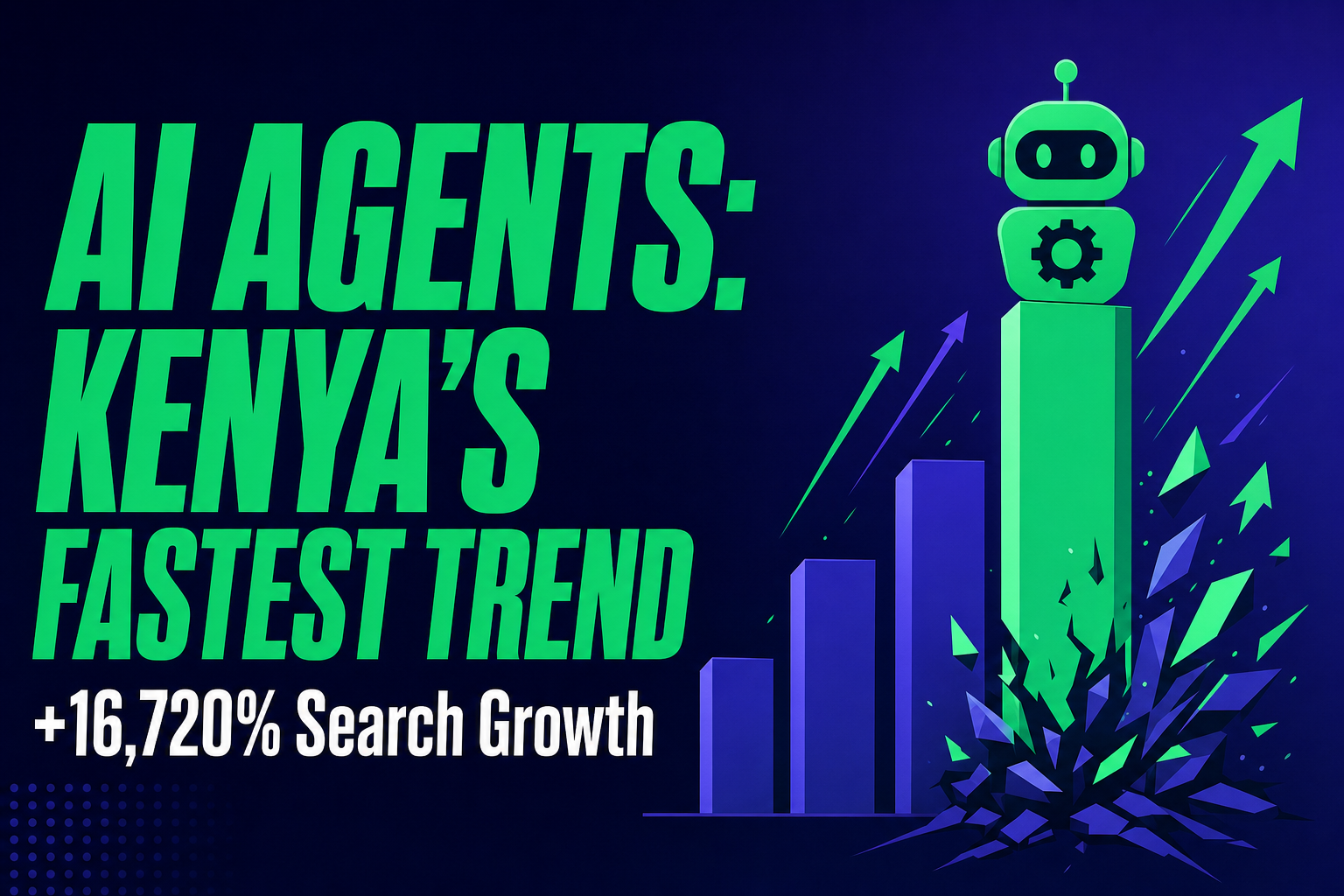
Most trends get written about after they've already peaked. This one is different — the search data shows a curve still climbing steeply, which means there's still real room to get ahead of it rather than compete inside an already-saturated conversation.
This guide breaks down exactly what AI agents are in plain terms, why Kenyan search interest exploded specifically, and how to turn early understanding into a practical income stream.
An AI agent is software that doesn't just answer a question the way a chatbot does — it plans and carries out multi-step tasks on its own, like researching a topic, drafting a document, and checking its own work, with minimal human input at each step.
According to Google search-trend data reported for Kenya in March 2026, interest in "AI agents" surged 16,720% year-over-year, alongside sharp rises in "AI literacy" (+1,010%) and "prompting tools" (+1,230%) — signaling that Kenyans are moving from casually using AI to actively building and deploying it.
The practical opportunity: understanding AI agents early, then packaging that understanding into a guide, course, or service, positions you ahead of a genuinely explosive demand curve rather than a crowded, saturated one.
Search-trend data for Kenya covering March 2026 showed one of the sharpest single-topic spikes recorded in the country's recent digital history.
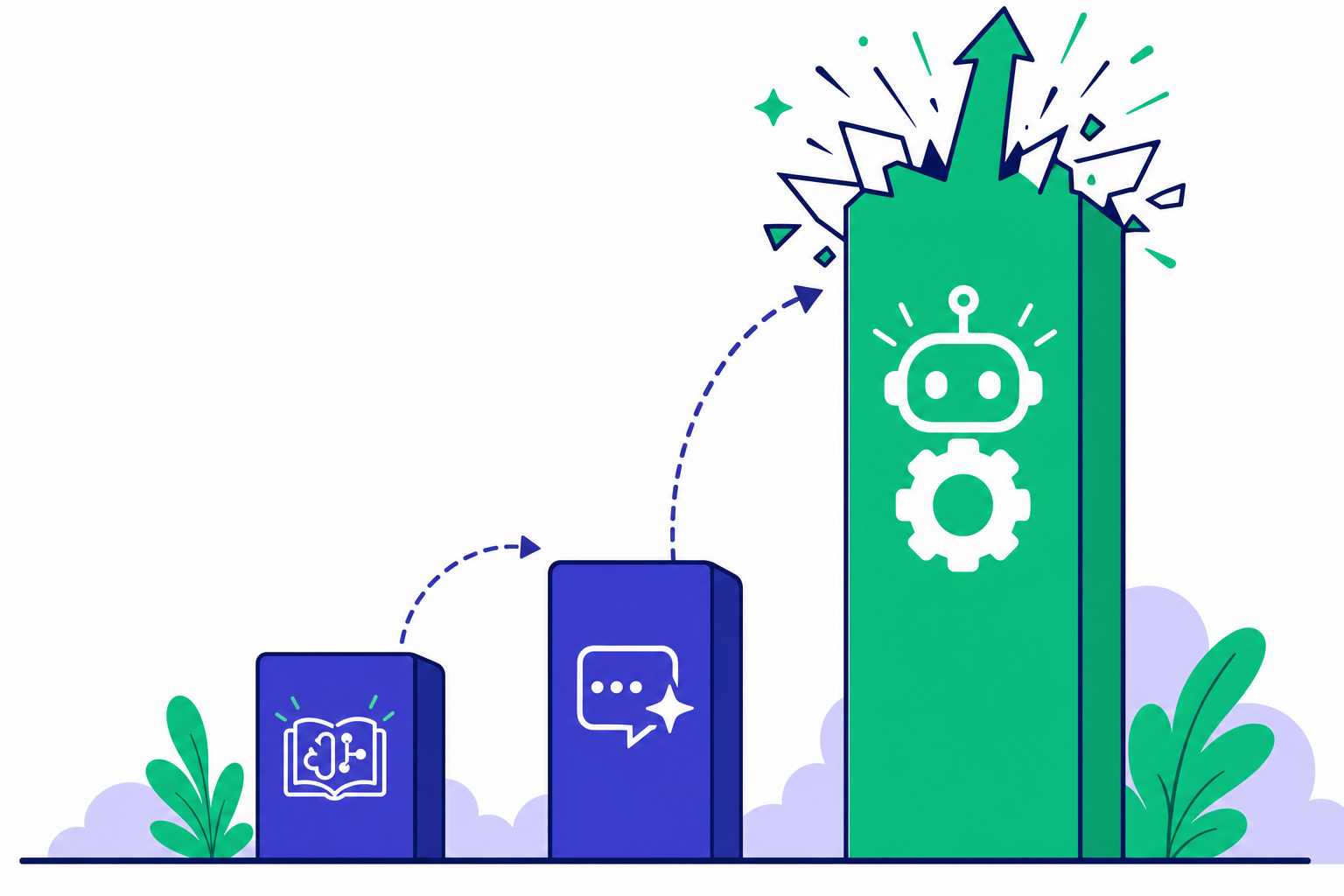 AI agents didn't just trend — they broke the chart.
Kenya search interest in "AI agents" rose 16,720% year-over-year — alongside "AI literacy" (+1,010%) and "prompting tools" (+1,230%).
Numbers this large usually mean one of two things: either a term just entered mainstream awareness from a very small base, or genuine, sustained behavior change is underway. In this case, it's both — AI agents were a niche technical term a year ago, and Kenyans are now actively searching to understand and use them, not just read headlines about them.
Stripped of jargon, an AI agent is software given a goal, given tools, and left to figure out the steps itself.
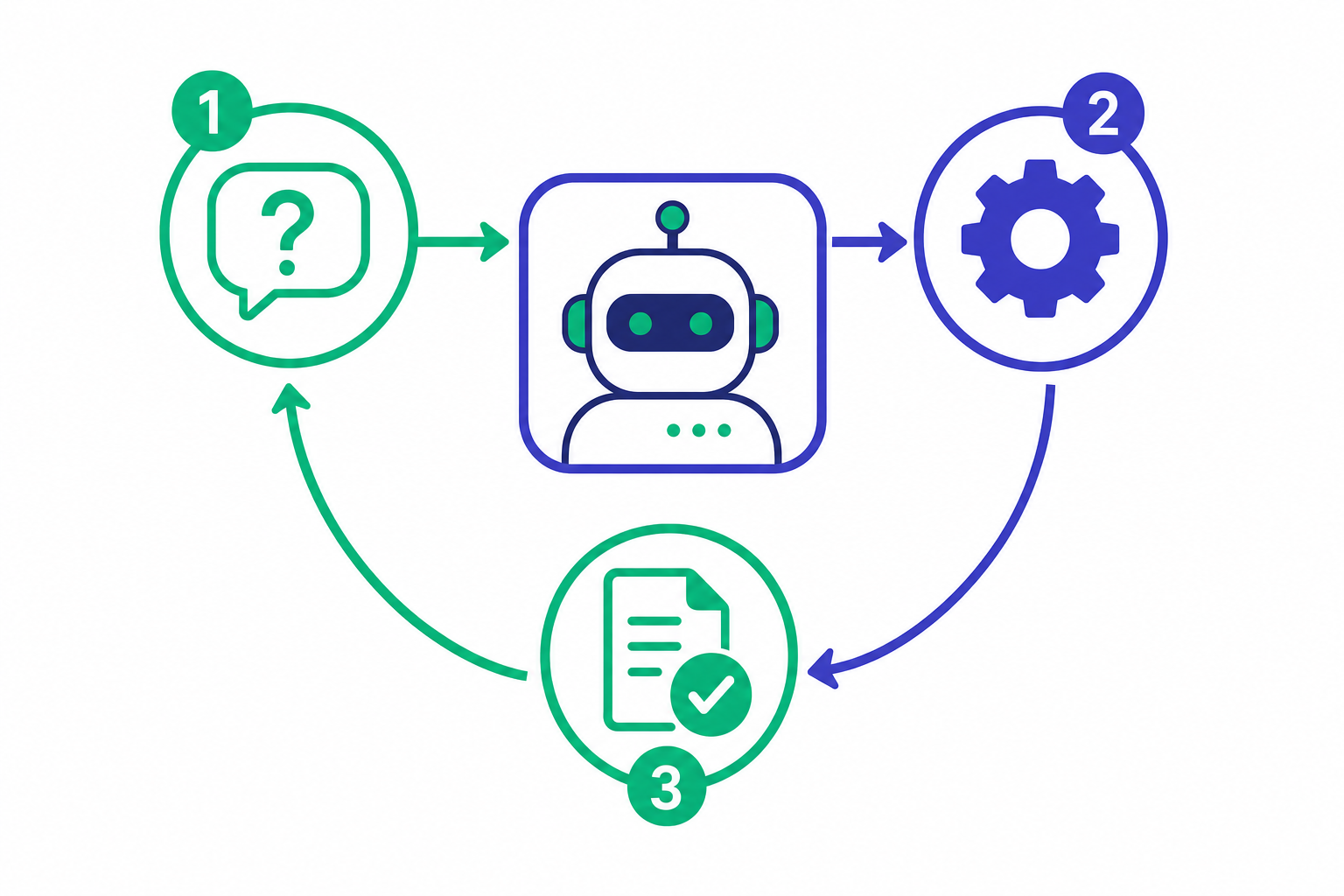 Input, reasoning, action — the basic loop behind every AI agent.
It takes an instruction, reasons through what needs to happen to accomplish it, takes real actions (searching, writing, checking its own output), and only comes back to a human when the goal is done or it genuinely needs a decision only a person can make. That's the core shift from earlier AI tools: less "answer my question," more "handle this task."
The distinction matters because it explains why the search interest is so different from ordinary "how to use ChatGPT" curiosity.
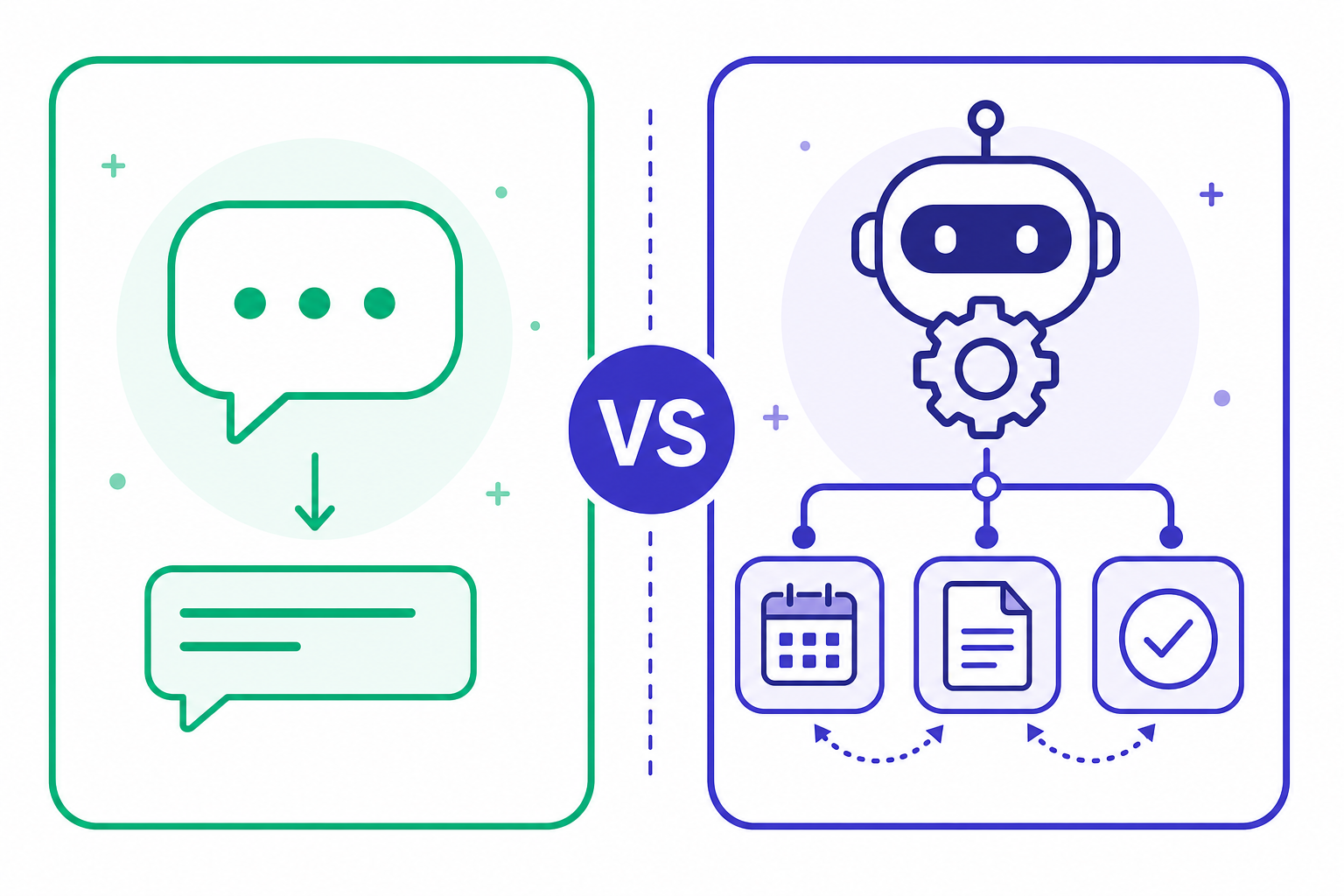 One answers. The other acts.
A chatbot gives you one answer per message and waits for your next instruction. An AI agent chains several steps together toward a goal without needing a new prompt at every single step — closer to delegating a task to an assistant than asking a search engine a question. If you're building AI literacy generally before specializing in agents specifically, this guide to making money online quickly with AI is a useful, more foundational starting point.
Why now: The tools needed to build simple agents became genuinely accessible to non-programmers only recently — which is exactly the kind of moment that produces a 16,720% search spike from a low starting base.
Kenya's reputation as Africa's "Silicon Savannah" isn't incidental here — high smartphone penetration, an already AI-curious population, and a large freelance and digital-hustle economy mean new AI capabilities get adopted for income purposes unusually fast, not just for entertainment or curiosity.
The pattern echoes what's already working in adjacent income paths — the same principle behind learning free digital skills to earn online applies here: getting genuinely useful at something in high demand, early, using free resources, before the market gets crowded.
You don't need to be a developer to benefit from this trend — understanding AI agents well enough to explain and apply them is itself valuable right now.
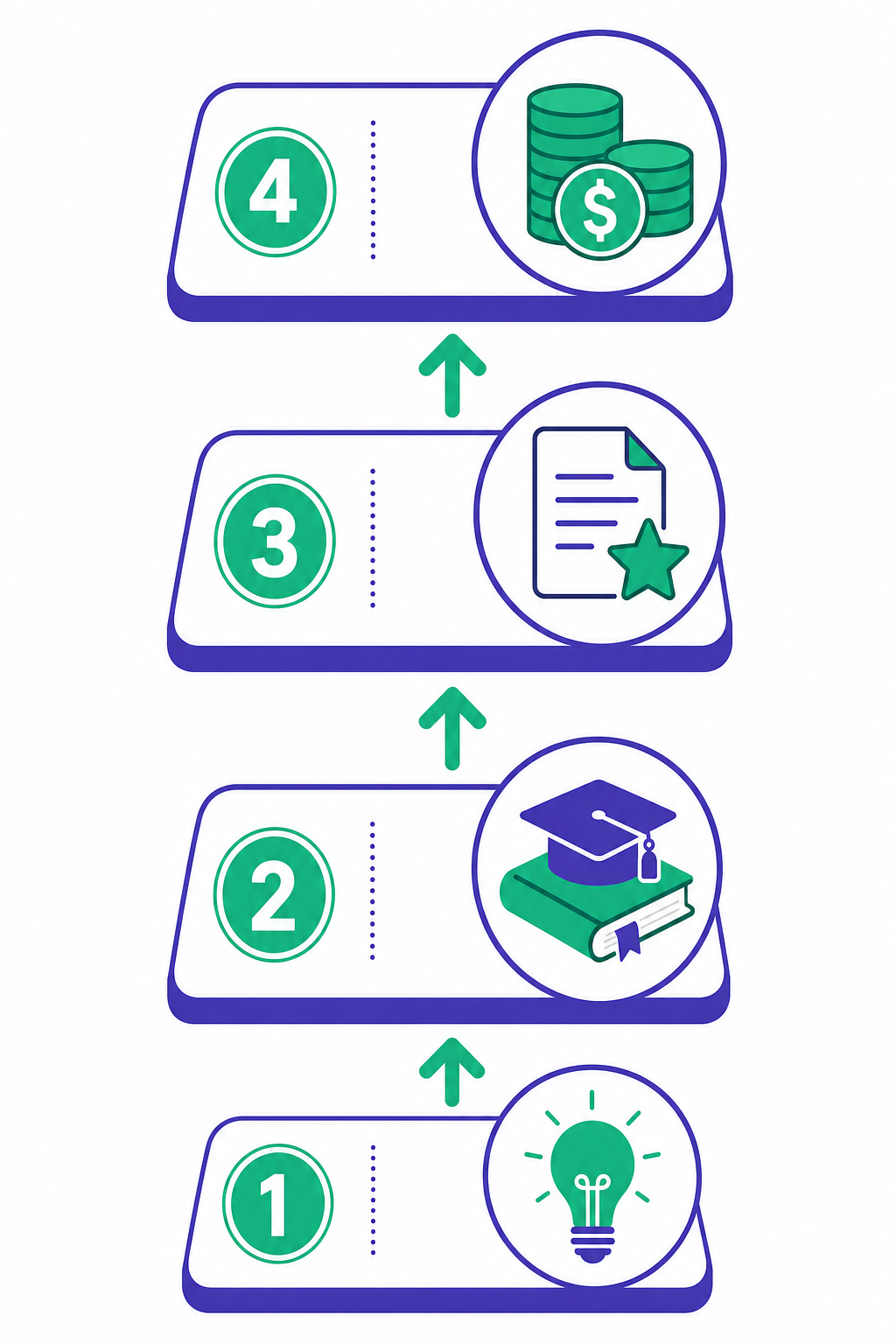 Understanding compounds into income faster than most people expect.
Start by learning the concept clearly enough to explain it to someone else in plain language — that alone puts you ahead of most casual searchers. Then build hands-on familiarity with at least one accessible AI tool that can perform multi-step tasks. Once you can demonstrate real, practical use cases, package that knowledge into something teachable.
The fastest way to monetize being early to a trend is turning your understanding into a guide, template, or service others can buy before they've caught up themselves.
Once you have a working understanding, the fastest packaging move is a focused, practical guide — not a comprehensive technical manual. Beginners searching a surging trend want a clear starting point, not an exhaustive reference. If you also plan to build an audience around this content, getting clients online without paid ads covers exactly how to find that first audience without a budget.
Overcomplicating the explanation — most searchers right now want plain-language clarity, not deep technical detail.
Waiting for the trend to "mature" — the whole advantage of an early trend disappears once everyone else catches up.
Chasing hype instead of practical use cases — buyers pay for what an AI agent can actually do for them, not for buzzwords.
Ignoring the local angle — framing content specifically for Kenyan searchers and use cases converts better than generic global content.
Building nothing sellable — understanding a trend early is only valuable once it's packaged into something others can buy or learn from.
A 16,720% search surge doesn't happen twice. Kenya's interest in AI agents is climbing at a pace that rewards early, clear, practical understanding far more than late, deep technical expertise. Learn the concept well enough to explain it simply, build one real use case, and package what you know before the search curve levels off.
Spend 30 minutes today learning how one accessible AI agent tool actually works, then write down one task it could realistically handle for someone in your own network.
An AI agent is software given a goal that plans and carries out multiple steps on its own to accomplish it, taking real actions like researching, drafting, and checking its own work, rather than only answering a single question at a time.
Google search-trend data reported for March 2026 showed Kenyan interest in "AI agents" rising 16,720% year-over-year, alongside sharp increases in "AI literacy" (1,010%) and "prompting tools" (1,230%).
A chatbot gives one response per message and waits for a new instruction each time. An AI agent chains multiple steps together toward a goal with far less back-and-forth prompting, closer to delegating a task than asking a single question.
No. Understanding what AI agents are and how to apply them practically is valuable on its own, and many accessible tools now let non-programmers build simple agent workflows without writing code.
Package genuine, practical understanding into a beginner-friendly guide, template, or service before the search curve becomes saturated. Being an early, clear explainer of a fast-rising topic is itself a sellable asset.
Explosive early growth like this typically signals genuine behavior change rather than a passing headline cycle, especially when paired with rising adjacent searches like AI literacy and prompting tools — but acting early while demand is still climbing carries the biggest advantage.
Discover more articles you might be interested in

Discover 10 practical skills you can begin learning in 30 days, create proof of your ability and package into a realistic starter offer for earning online.
By Davie

How to Make Money Online as an SEO Specialist: 18 Realistic Income Opportunities
By Davie

Learn how small businesses can use AI for marketing, sales, customer service and automation—and turn real business experience into digital products to sell online.
By Davie

Learn how to build an AI-powered online business with practical ideas, tools, customer strategies, AI automation and a 30-day startup roadmap
By Davie
Get the updates, on newly released, popular & fast-moving MRR digital products
Up to Top
Comments All
Jane
@jane
I’ve been hearing more about AI agents lately, so I liked how this article breaks the topic down in a simple way and connects it to opportunities in Kenya. It made me think more about how AI could create new opportunities for people here. Definitely worth the read! 👏
September 06,2026 At 09:49 PM
Jesse
@jesse
The part about AI agents caught my attention because I could see how they can be used beyond just chatting with AI. I could apply the idea by creating simple agents that handle repetitive tasks for businesses, such as customer support or lead follow-ups. It made the topic feel practical and relevant to opportunities in Kenya.
August 26,2026 At 10:53 PM
Jesse
@jesse
The part about AI agents caught my attention because I could see how they can be used beyond just chatting with AI. I could apply the idea by creating simple agents that handle repetitive tasks for businesses, such as customer support or lead follow-ups. It made the topic feel practical and relevant to opportunities in Kenya.
August 26,2026 At 10:42 PM