

Most beginners assume they need an advertising budget before they can find clients — and give up before starting because they don't have one. In reality, some of the most reliable ways to land a first client cost nothing except a portfolio, a clear message, and consistent follow-through.
This guide walks through exactly how to build an organic client pipeline: outreach, community presence, social proof, and referrals, in that order.
To get clients online without paid ads: (1) build a small portfolio using real or mock samples, (2) send targeted cold outreach messages to a short list of ideal prospects, (3) post helpful content in niche communities where your buyers already gather, (4) collect and display testimonials from your very first clients, and (5) turn every satisfied client into referrals by simply asking.
These five channels cost nothing but time, and together they form a loop: outreach lands a client, a good result earns a testimonial, and a testimonial earns a referral — which restarts the cycle without you spending a shilling on ads.
Paid ads work by paying to interrupt people who weren't necessarily looking for you. Organic client acquisition works differently — it puts you directly in front of people who are already looking for exactly what you offer, whether that's in a community they're active in or a DM they were open to reading.
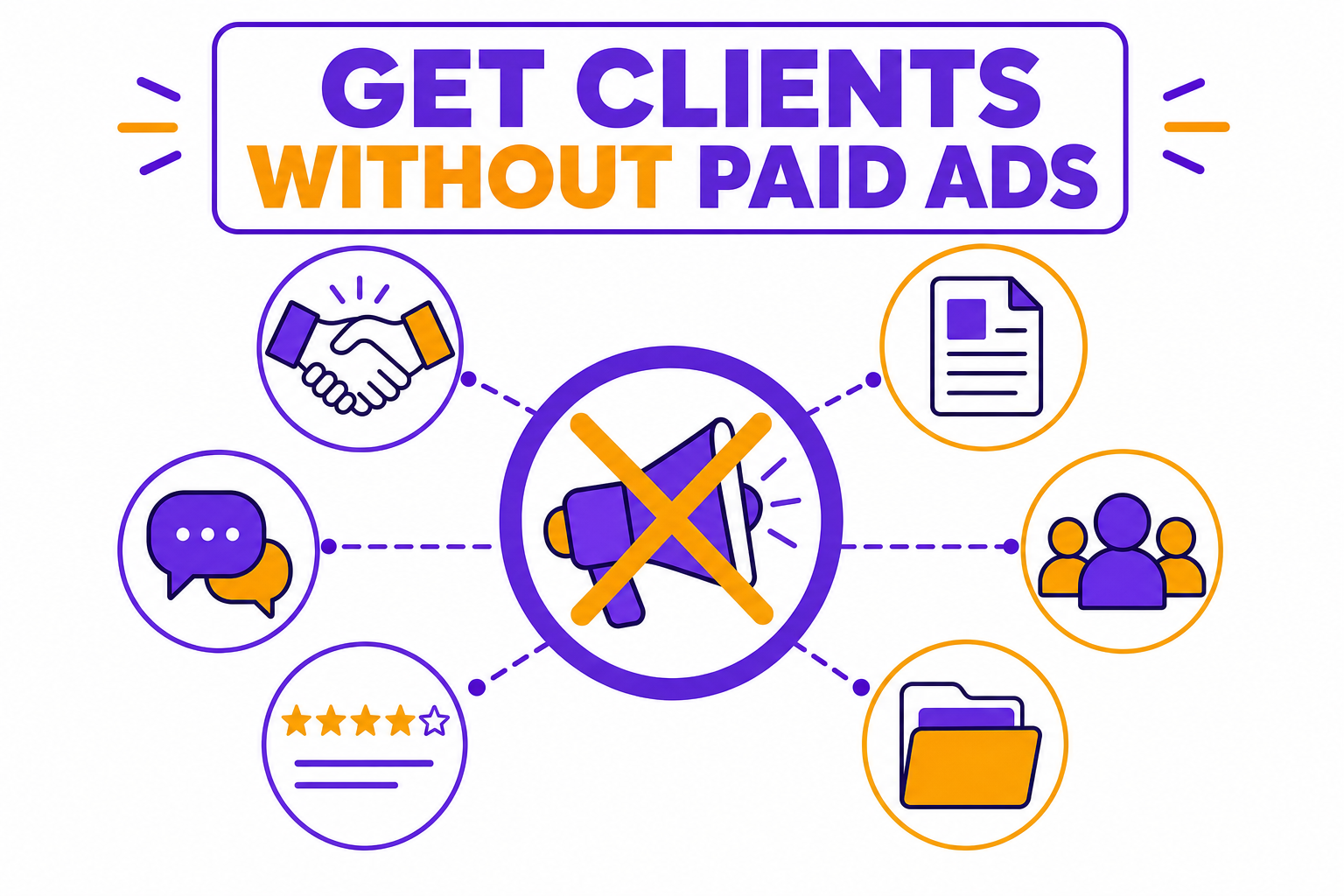 Six free channels replace the one paid one.
If you're building freelance skills alongside this, the free digital skills guide pairs naturally with this one — the skill gets you something to sell, this guide gets you someone to sell it to.
Treat client acquisition as a simple four-step pipeline rather than a random scramble every time you need work.
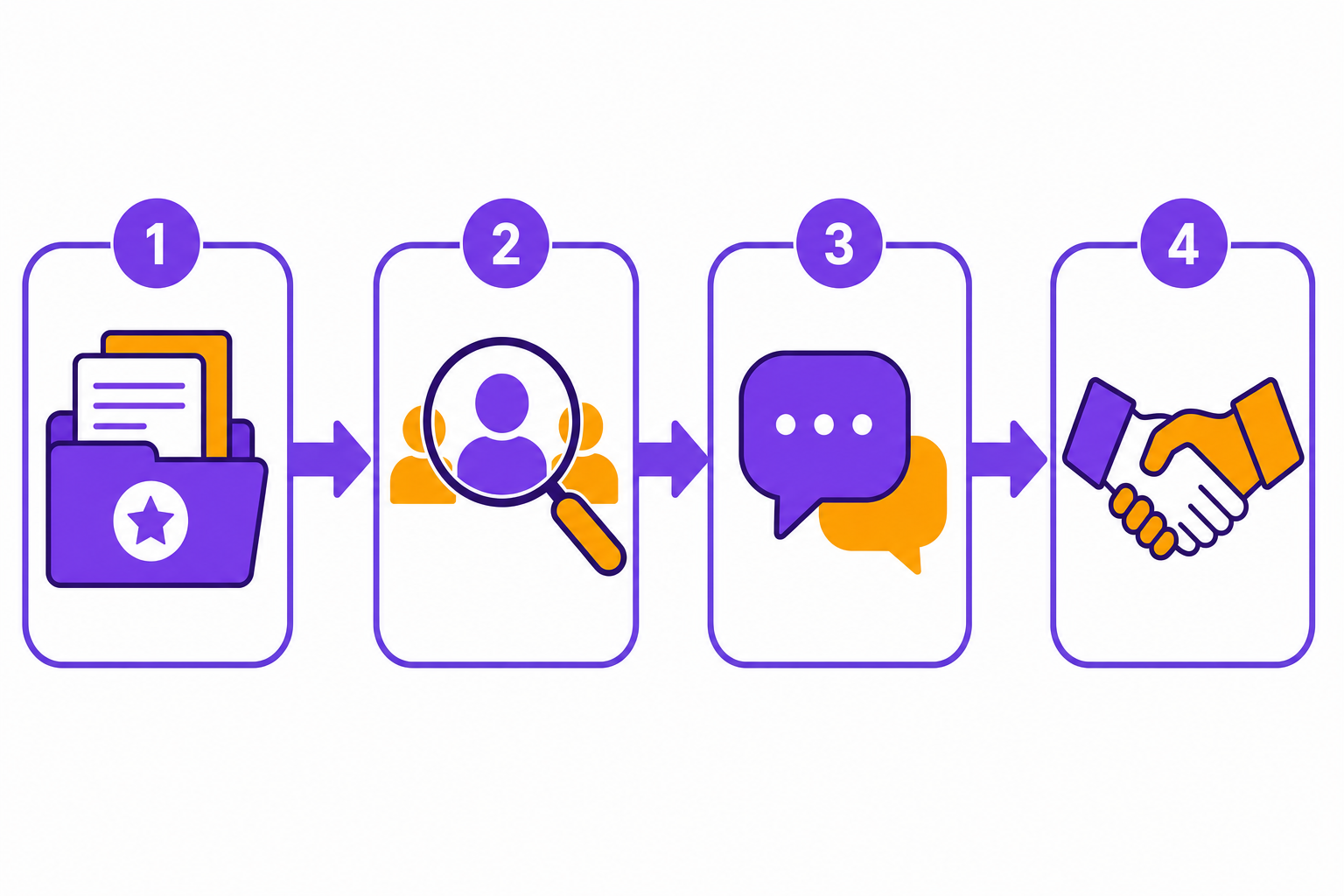 Portfolio, prospecting, outreach, close — repeat.
Start with a portfolio, even a small one built from mock samples if you have no paying clients yet. Then identify a short, specific list of prospects rather than messaging everyone. Send a direct, personalized outreach message. Close the conversation with a clear, low-friction next step — a call, a sample, or a small paid trial task.
Most cold messages get ignored because they're generic and self-focused. A message that gets replies does three things: references something specific about the prospect, states a clear value in one sentence, and asks a low-pressure question rather than pitching a sale immediately.
Ready-to-Use Scripts
The Freelance Freedom Blueprint includes exact cold DM scripts, proposal openers, and Fiverr/Upwork response templates — built specifically to get beginners their first paid client within 7–14 days.
See the Freelance Freedom Blueprint →
Every niche has a handful of places where its buyers already gather — a Facebook Group, a Telegram channel, a subreddit, a WhatsApp community. Showing up consistently with genuinely helpful answers, not sales pitches, is one of the most reliable ways to be noticed by people who need exactly what you offer. This is the same underlying principle behind content repurposing across platforms — turning one piece of content into many touchpoints means more chances for the right prospect to find you without spending anything extra.
Give before you ask: Answer three genuine questions in a community before ever mentioning what you sell. People remember who helped them for free long before they remember who pitched them something.
A testimonial does more selling than almost anything you could say about yourself. After finishing work for any client — even a discounted first one — ask directly for a short review of the result, and ask permission to share it publicly.
If you're weighing whether to package your own expertise into something reusable and sellable rather than only trading time for clients, this guide to turning your lifestyle into a profitable online business walks through identifying assets you already have that can become a digital product alongside your client work.
The single highest-leverage habit in client acquisition is simply asking every satisfied client if they know someone else who could use the same help.
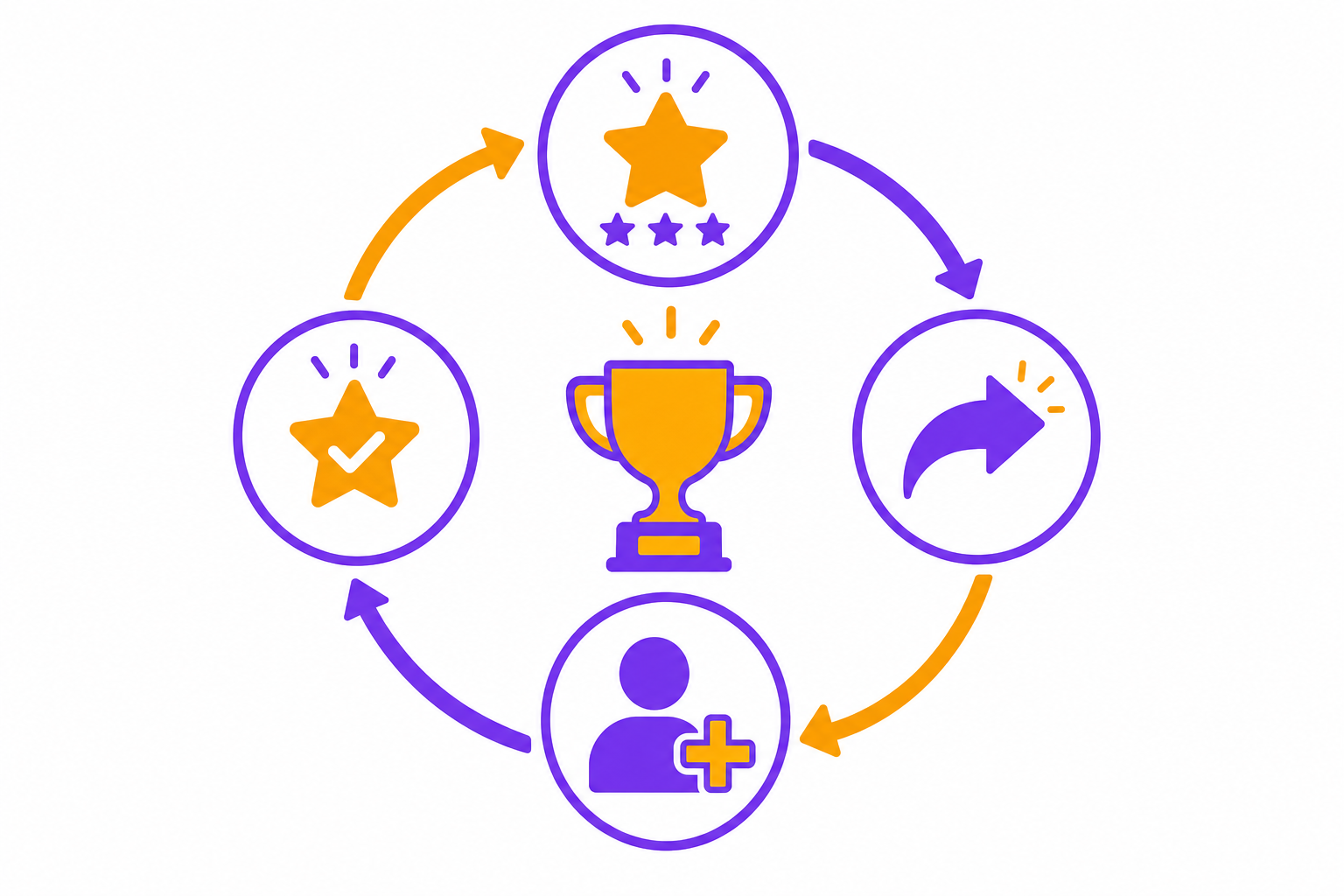 One good result, asked about directly, restarts the whole cycle.
Most freelancers never ask for referrals directly, assuming clients will offer on their own. They rarely do, not because they're unwilling, but because it simply doesn't occur to them unless prompted. A single sentence — "if you know anyone else who could use this, I'd appreciate the introduction" — converts satisfied clients into an ongoing, unpaid referral engine.
Client work trades time for money directly, which caps how much you can earn in a day. Pairing it with a digital product built from the same expertise — a template, a guide, a checklist — creates income that doesn't require a new client conversation every time. The affiliate marketing model takes this even further, letting other people sell your product for you while you focus on client delivery.
Getting clients online without paid ads isn't slower — it's just built on different inputs: a portfolio instead of a budget, a specific message instead of a broad audience, and consistency instead of a one-time spend. The loop of outreach, testimonials, and referrals compounds over time, often outperforming ads once it's running.
Send three targeted outreach messages today, and ask your most recent client for one referral before this week ends.
Yes. Cold outreach, niche communities, testimonials, and referrals cost only time, and many freelancers and service providers land their first several clients entirely through these channels before ever running a paid ad.
An effective cold message references something specific about the prospect, states a clear value in one sentence, and ends with a low-pressure question rather than an immediate sales pitch.
Offer a discounted or free trial task to a first client specifically in exchange for a testimonial. Even one strong, specific testimonial is enough to start building credibility with the next prospect.
Ask right after delivering a good result, when the client's satisfaction is freshest. A simple, direct request — asking if they know anyone else who could use the same help — works far better than hoping they'll offer unprompted.
Look for Facebook Groups, Telegram channels, or forums where your specific type of buyer already asks questions related to what you offer, and prioritize genuinely helpful participation over promotional posts.
They complement each other well. Client work builds cash flow and testimonials quickly, while a digital product built from the same expertise creates income that isn't capped by the number of hours you can personally work.
Discover more articles you might be interested in

Learn How to Make Money Online Selling What You Know as a Digital Product
By Super Admin
LinkedIn Marketing for Digital Products
By Davie
Pinterest Marketing for Digital Products
By Davie
How to Build an Email List From Zero (and Sell Your Digital Products)
By Davie
Get the updates, on newly released, popular & fast-moving MRR digital products
Up to Top
Comments All
Martin
@martin
I really liked this article. Finding clients without spending money on ads can be tough, so I found the ideas here really useful. A few of the tips stood out to me, and I can actually see myself trying them out.
September 06,2026 At 09:52 PM
Jesse
@jesse
The ideas here are easy to put into action. I could use platforms like LinkedIn and social media to showcase my work, connect with potential clients, and share useful content instead of spending money on ads. It showed me that consistently providing value can be a realistic way to attract clients organically.
August 26,2026 At 10:55 PM