

Virtual assistant work is one of the fastest, lowest-barrier ways for Kenyans to enter remote work — it's built entirely on organization, communication, and reliability rather than a specific degree or years of prior experience. Businesses everywhere, from local entrepreneurs to international founders, need help managing the small but constant tasks that pull them away from growing their business.
This guide walks through exactly what a VA does, the skills to learn first, and how to land and price your first clients.
To become a virtual assistant in Kenya: (1) learn the core VA skills — email management, calendar scheduling, data entry, and basic Google Workspace tools, (2) pick one or two areas to specialize in rather than offering everything, (3) build a simple portfolio even from mock or unpaid sample tasks, (4) create profiles on freelance platforms and pitch a short list of ideal clients directly, and (5) deliver your first jobs reliably to earn reviews that attract the next client.
Virtual assistant work is one of the most accessible remote income paths for Kenyans because it needs no formal qualification, no expensive equipment, and can start with just a smartphone or basic laptop and stable internet.
Become a Job-Ready, Client-Ready Virtual Assistant - and Learn How to Work Smarter With AI

Virtual assistance rewards exactly the traits already common among Kenyan freelancers and side-hustlers: strong communication in English, comfort with a smartphone or basic laptop, and the discipline to follow through consistently. Unlike many remote roles, most VA clients don't require a degree, a portfolio of published work, or years of formal experience — just proof you can be trusted to handle a task correctly and on time.
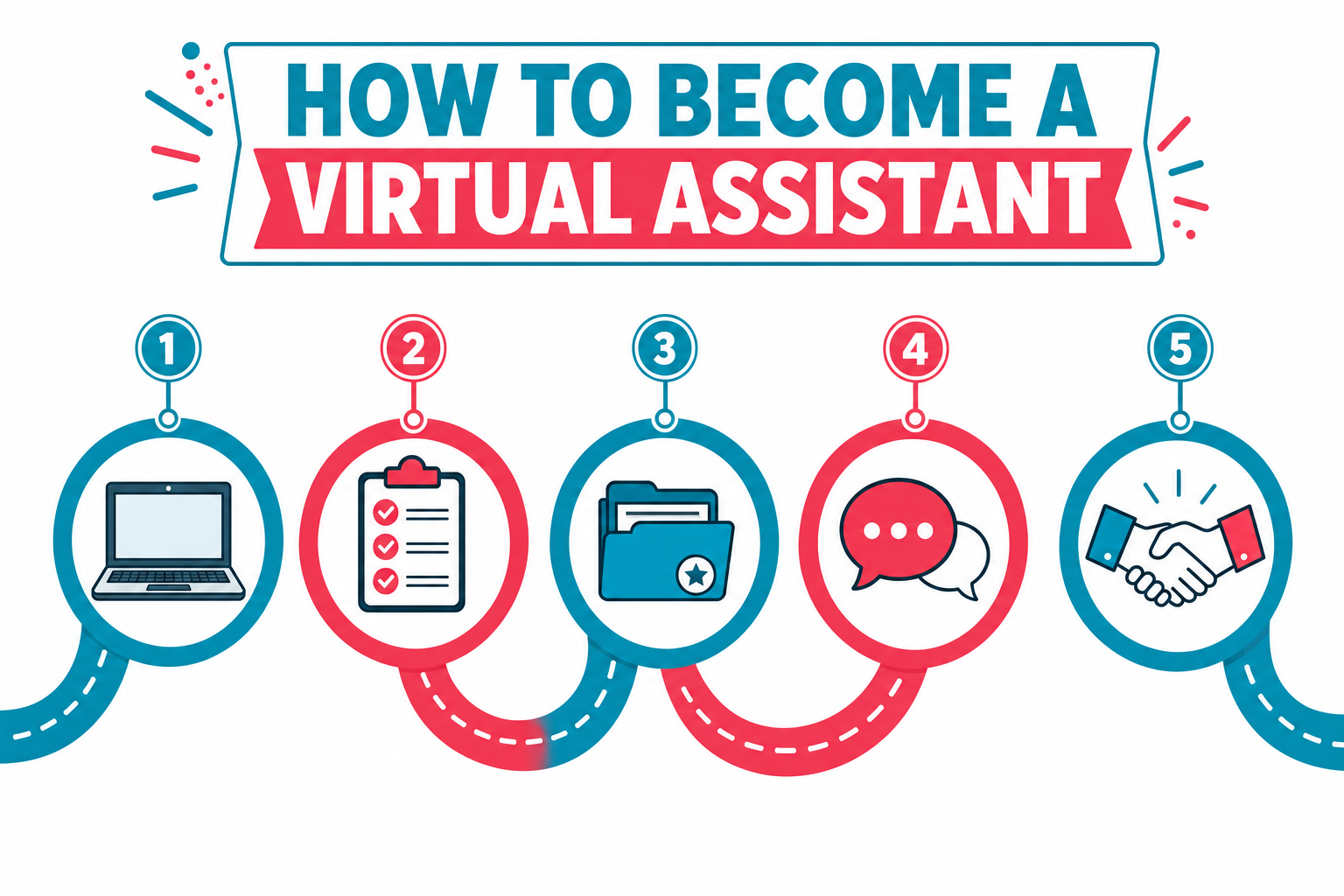 The full path from zero to your first VA client.
If you're weighing VA work against other remote paths, this guide to realistic remote job alternatives lists virtual assistance alongside freelancing and digital products trading as one of the most accessible entry points in 2026.
Clients hire VAs to remove specific, recurring friction from their day — these six skills cover the vast majority of what gets requested.
 Master two or three of these before trying to offer all six.
Email management: Sorting, replying to, and flagging priority messages in a client's inbox.
Calendar & scheduling: Booking meetings, avoiding double-bookings, and sending reminders.
Data entry: Organizing spreadsheets, updating records, and maintaining clean databases.
Customer support: Responding to client or customer inquiries via chat, email, or WhatsApp.
Social media management: Scheduling posts, replying to comments, and light content coordination.
Google Workspace tools: Comfortable, efficient use of Docs, Sheets, Slides, and Gmail.
If Google Workspace tools feel unfamiliar, spend a focused afternoon practicing Docs, Sheets, and Gmail specifically the way a client would use them daily — shared folders, comment threads, and calendar invites — rather than learning every feature in isolation.
New VAs often try to offer every possible service, which makes it harder for a prospective client to picture exactly what they're hiring you for. Specializing — for example, focusing specifically on inbox and calendar management, or customer support for e-commerce sellers — makes your pitch sharper and your rates easier to justify.
Start narrow, expand later: A VA known for one thing done excellently gets referred more often than a generalist who does everything adequately. Add services once you have a few solid client relationships.
You don't need past clients to prove competence — a small set of realistic mock tasks demonstrates the same thing to a first-time hirer.
Organize a sample inbox and show how you'd triage it, build a mock content calendar, or clean up a messy sample spreadsheet. Three well-organized mock examples, described clearly with the specific problem each one solves, are usually enough to convince a first-time client you can be trusted with the real thing.
Getting your first VA client is a simple four-step process repeated consistently, not a single lucky break.
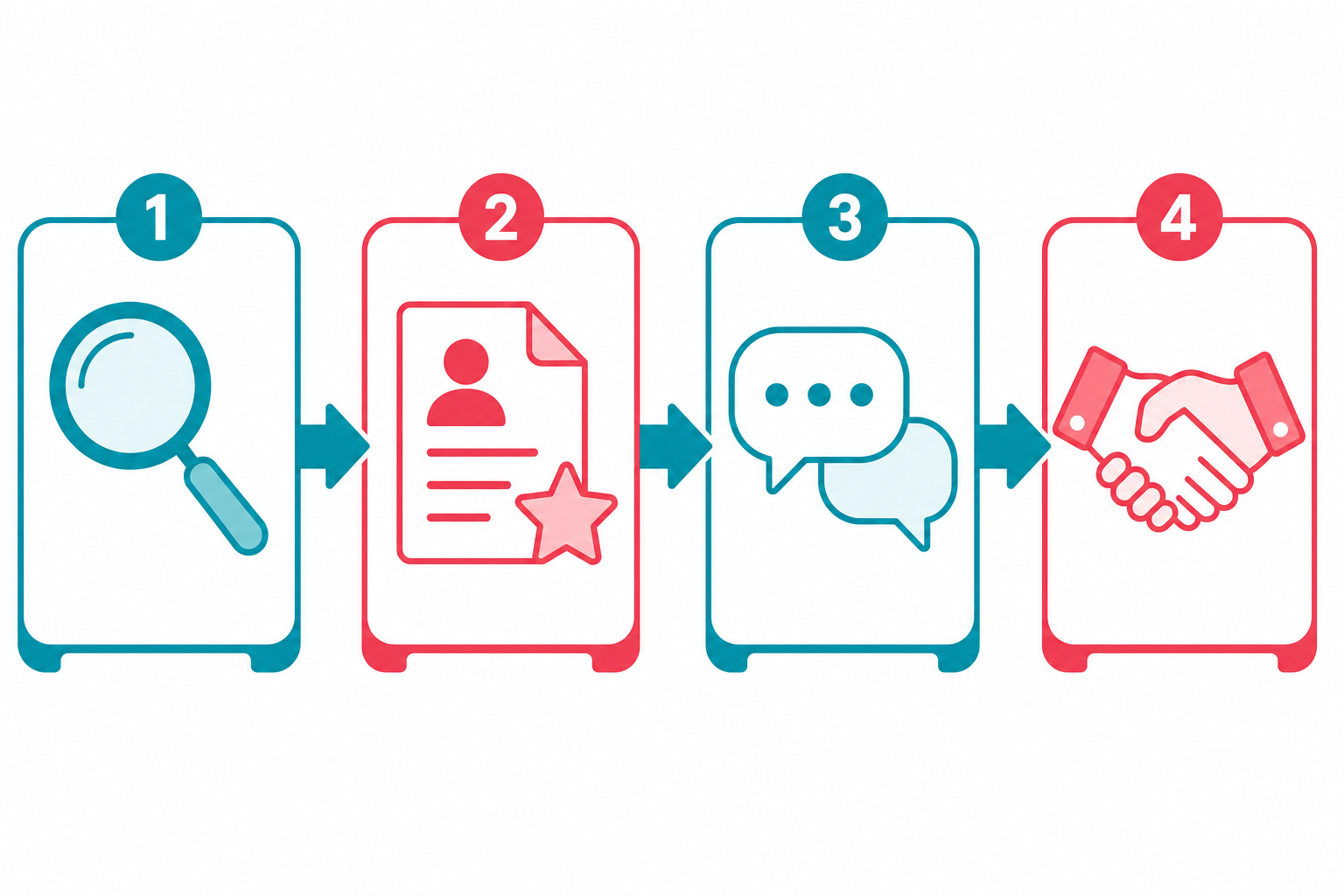 The same four steps, repeated, land every VA client after the first.
Set up profiles on established freelance platforms, and simultaneously identify a short list of small businesses or entrepreneurs you could help directly. Many first VA clients come from direct outreach rather than platform applications — if you need a full outreach system, this guide to getting clients without paid ads covers cold messaging, testimonials, and referrals in depth.
Related Skill Path
Digital marketers and job seekers are proving their value first, then getting hired — the same "results before promises" approach works well for aspiring VAs, especially during high-competition hiring months.
Read the job-search strategy →
Most beginner VAs undercharge out of fear of losing a client, then struggle to raise rates later with the same person. A more sustainable approach is pricing slightly below market for your first 2–3 clients specifically in exchange for a strong testimonial, then pricing at full market rate from there. Package-based pricing (a set number of hours or tasks per week) is usually easier for clients to commit to than pure hourly billing.
Virtual assistance has a natural growth ladder once you have steady client relationships.
 Most VAs plateau at hourly work simply because they never plan the next rung.
Move from single hourly tasks to packaged weekly retainers, then to managing several retainer clients at once. Eventually, some VAs bring on subcontracted assistants of their own, turning a personal service into a small agency. If you'd rather diversify into teaching rather than scaling client work, this guide to starting an online learning business shows how VA expertise itself can become a sellable course for the next wave of beginners.
Becoming a virtual assistant in Kenya doesn't require a certificate, a large investment, or years of experience — it requires organization, reliable communication, and a clear specialty. Learn two or three core skills well, build a small portfolio, and pitch a short list of ideal clients directly rather than waiting for platform applications alone.
Pick one VA skill from this guide today, spend an hour practicing it on a mock task, and send your first outreach message before the week ends.
No. Most clients care far more about demonstrated reliability and clear communication than formal qualifications. A small portfolio of sample tasks is usually enough to land a first client.
A basic laptop or reliable smartphone and stable internet access are usually sufficient to begin, since most VA tasks involve tools like email, spreadsheets, and messaging apps rather than specialized software.
Earnings vary widely depending on niche, client type, and consistency, but many beginner VAs start with hourly or small package rates and increase pricing once they've built a track record of reviews and referrals.
Specializing in one or two areas, such as inbox management or customer support, makes your pitch clearer to prospective clients and typically leads to more referrals than trying to offer every possible service at once.
Freelance platforms are one option, but many first clients come from direct outreach to small businesses or entrepreneurs, combined with asking for referrals after successfully completing early projects.
Yes. Many VAs progress from single hourly tasks to packaged retainers, then to managing multiple clients, and eventually to running a small VA agency by bringing on subcontracted assistants of their own.
Discover more articles you might be interested in

Learn where to find reliable step-by-step guides online, how to choose the right tutorial for your task, check whether it is current and follow instructions safely.
By Davie

Stop searching broad topics and start finding the exact knowledge you need. Learn how to define your problem, search smarter, choose reliable sources, verify answers and take action.
By Davie

Quick Knowledge or an online course? Learn when a focused answer is enough, when structured learning is better, and how to choose the right learning depth for your goal.
By Davie

Learn how to turn one useful digital product into multiple income streams through premium versions, bundles, courses, licensing, services, subscriptions, B2B sales and complementary products.
By Davie
Get the updates, on newly released, popular & fast-moving MRR digital products
Up to Top
Comments All
Purity
@purity
This article honestly caught my attention! I’ve been curious about becoming a virtual assistant, and I liked how it breaks everything down into simple steps. The fact that you can start building this skill from Kenya makes it even more interesting. It definitely gave me some motivation to look into it more!
September 06,2026 At 10:04 PM