
Every seller eventually hits a ceiling on how much they can personally promote. Affiliate marketing removes that ceiling by turning other people's audiences into your sales force — with zero upfront cost, since affiliates only get paid when they actually produce a sale. It's one of the most efficient ways to scale a digital product beyond what you can do alone.
This guide covers how to build a simple, working affiliate system from the very first promoter.
Affiliate marketing for digital products means recruiting other people to promote your product using a unique tracked link, paying them a commission only when they generate a sale. The system: (1) decide your commission rate (30–50% is typical for digital products), (2) recruit your first affiliates from happy customers, (3) build a simple promo kit so they can start immediately, (4) give every affiliate a unique tracked link, and (5) pay promptly to keep them motivated.
Unlike hiring staff, affiliates cost you nothing until they produce a sale — making it one of the lowest-risk ways to multiply your reach.
Vezill's built-in Master Resell Rights model already gives buyers a reseller path — affiliate marketing extends that same principle to promoters who never even buy the product themselves.
Hiring staff or running ads means paying upfront, with no guarantee of a return. Affiliates flip that risk entirely — you only pay a commission after a sale has already happened. Ten active affiliates each reaching a slightly different audience can outperform months of solo promotion, and the cost only ever scales with revenue, never ahead of it.
Vezill's Master Resell Rights model and a traditional affiliate program solve a similar problem in different ways.
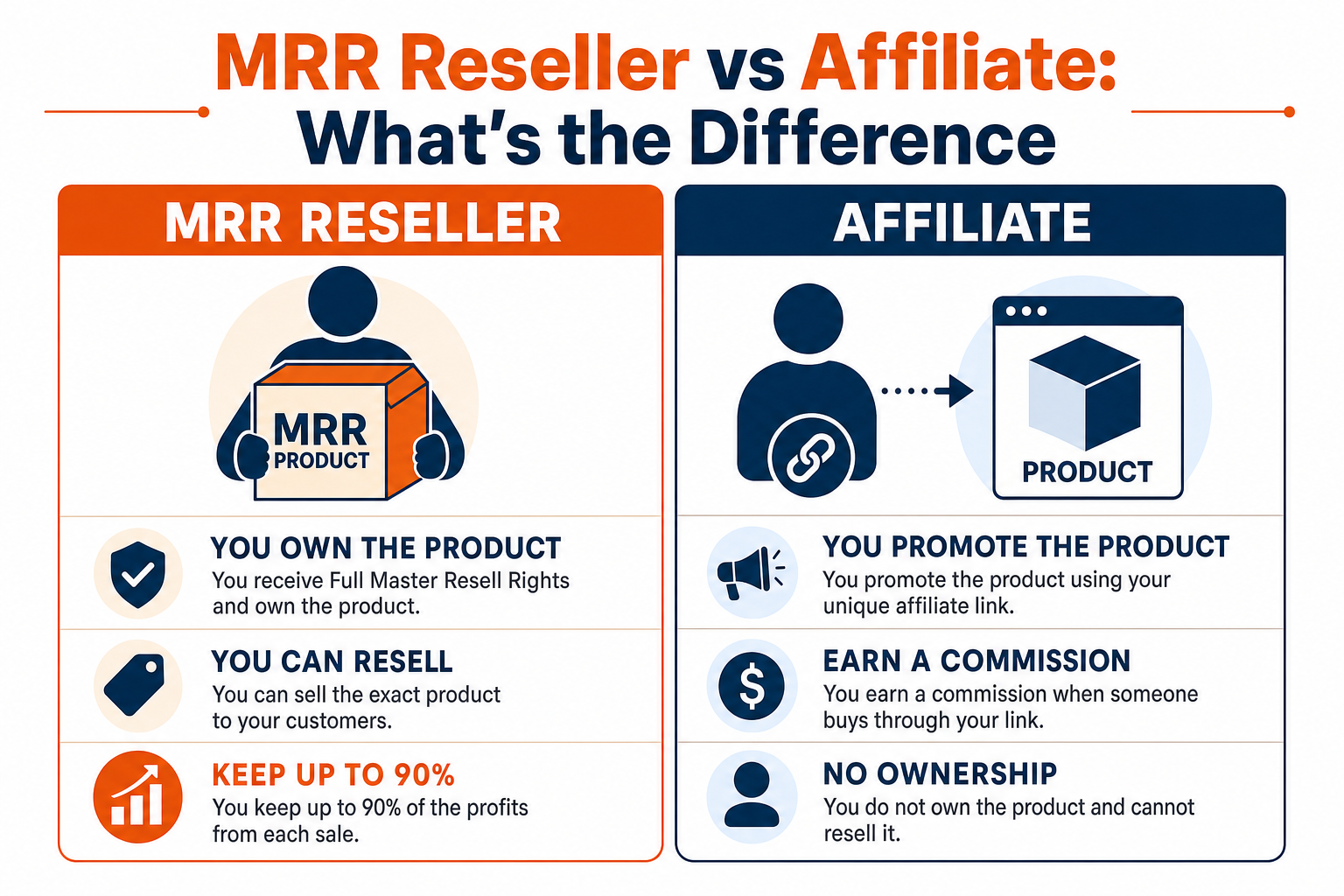 Two different ways to turn other people into your sales force.
An MRR reseller buys the product outright and can resell it under their own link, keeping the bulk of each resale. An affiliate never owns the product at all — they simply promote your existing listing with a tracked link and earn a commission on every sale it produces. Running both side by side gives you two distinct growth engines from the same product.
You don't need an existing network of professional marketers — your best first affiliates are already close by.
 Your happiest customers are your easiest first affiliates.
Start by asking buyers who've already left a great review or message — they're already convinced and simply need an incentive to share. Offer a generous commission (digital products can typically afford 30–50% since there's no production cost per sale), and remove every possible friction point so saying yes is effortless.
The biggest reason affiliates never promote anything is that they don't know what to say — solve that before they even ask.
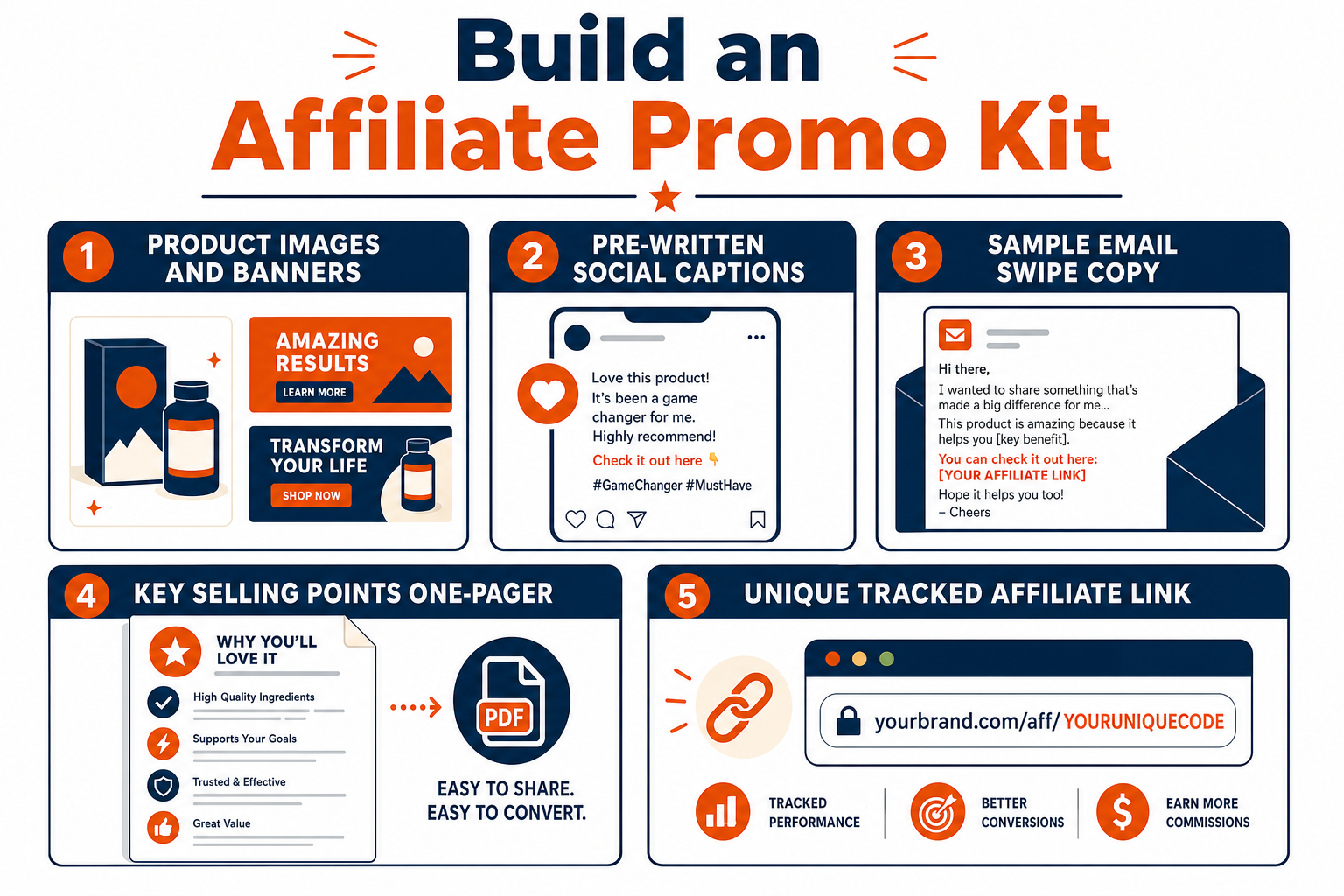 A ready-made kit turns a willing affiliate into an active one immediately.
Give every affiliate product images, pre-written captions they can copy directly, a short email they can send to their own list, and a one-pager summarising the key selling points. If you're still refining what makes your product compelling in the first place, how health practitioners package expertise into digital products and how chefs turn recipes into sellable digital assets both show how to frame a specific skill's selling points clearly enough that someone else can promote it convincingly.
A working affiliate program runs on a simple, repeating cycle.
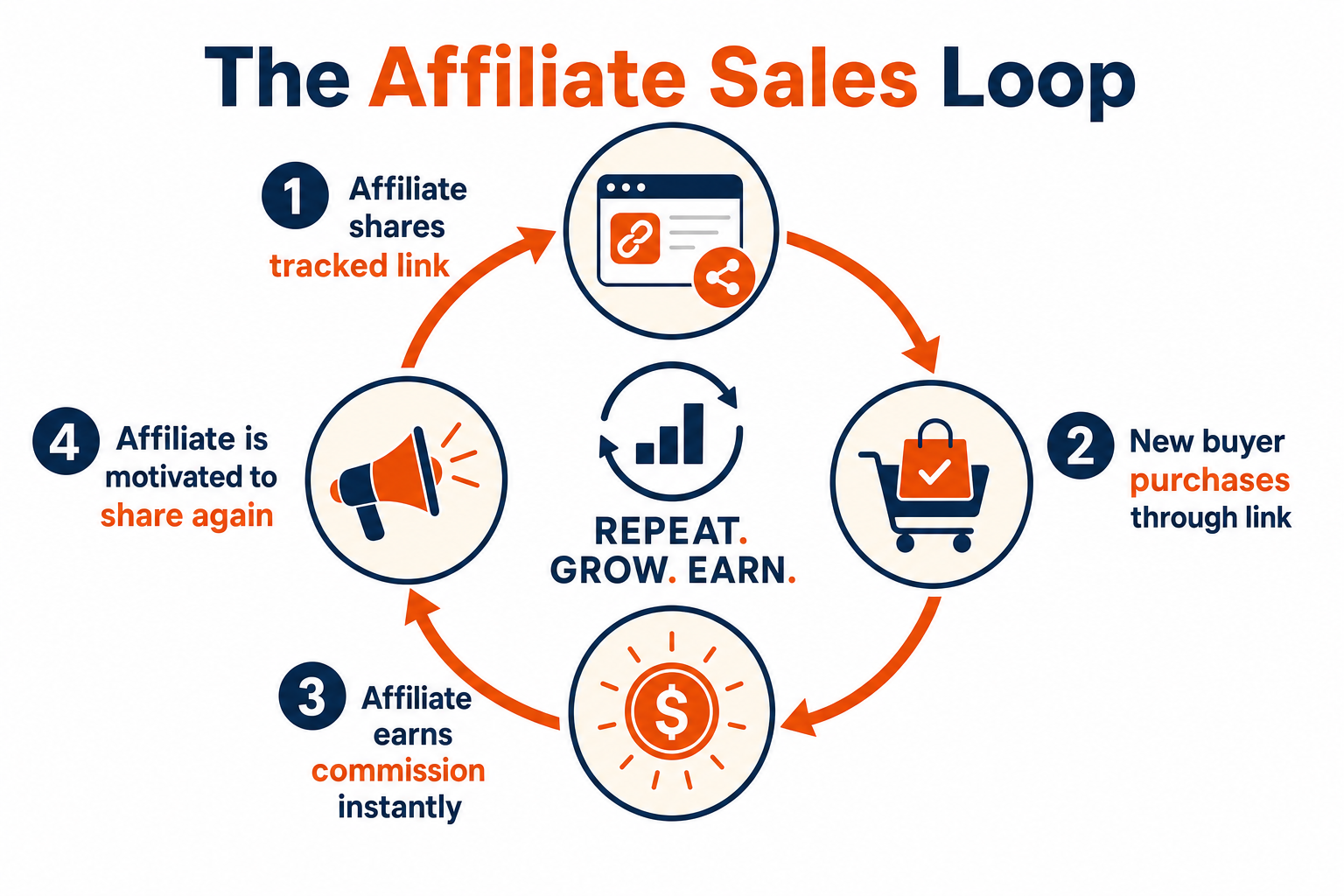 Fast, visible payouts keep affiliates promoting again and again.
Speed matters here more than almost anywhere else in the system — an affiliate who sees a commission land quickly is far more likely to share again than one left waiting weeks for payment. Whatever platform you use, prioritise fast, transparent tracking and payouts.
Momentum compounds: One motivated affiliate who earns a fast, visible commission is more valuable long-term than five who signed up but never promoted anything. Reward and recognise action, not just sign-ups.
Because digital products have no per-unit production cost, you can afford to be generous — a 30–50% commission is standard and still leaves healthy margin. Underpaying affiliates is one of the fastest ways to end up with a list of inactive promoters who never bother sharing. If you're weighing this against reselling and other income models, this simple step-by-step guide to earning daily as a digital trader shows the reseller side of the same economics from the promoter's perspective.
Look for people who already have an audience that overlaps with your buyer, even a small one — a niche community, a WhatsApp group, or a modest but engaged following. Zero-capital hustlers are often especially strong affiliates because promoting products already fits how they're building income; phone-friendly, zero-capital income ideas shows exactly the kind of person primed to become an active promoter.
Commission too low — affiliates won't invest effort promoting something barely worth their time.
No promo materials provided — most people won't write their own pitch from scratch.
Slow or unclear payouts — delayed rewards kill motivation faster than almost anything else.
Recruiting anyone, not the right people — a small group of engaged affiliates beats a large inactive one.
No ongoing communication — affiliates who feel forgotten quietly stop promoting.
You don't have to be the only person selling your product. A handful of motivated affiliates, equipped with the right materials and paid promptly, can reach audiences you never could alone — at a cost that only ever scales with your revenue. Start small: ask your happiest customers first, make it effortless for them to say yes, and pay quickly when they deliver.
Message three past buyers today and ask if they'd be willing to earn a commission promoting what they already love.
Affiliate marketing means recruiting other people to promote your digital product using a unique tracked link, and paying them a commission only when their promotion results in an actual sale, with no upfront cost to you.
An MRR reseller purchases the product outright and can resell that exact product under their own link, keeping the majority of each resale. An affiliate never owns the product; they simply promote your existing listing and earn a commission on resulting sales.
For digital products, 30 to 50 percent is a common and motivating range, since there is no per-unit production cost eating into your margin. Offering too little commission is one of the most common reasons affiliate programs fail to gain traction.
Start with your existing happy customers, particularly those who have already left positive reviews or messages, since they're already convinced and simply need an incentive and the right materials to begin sharing.
A basic kit typically includes product images or banners, pre-written social media captions, sample email copy, a one-page summary of key selling points, and each affiliate's unique tracked link.
As quickly and transparently as possible. Fast, visible payouts are one of the strongest motivators for affiliates to continue promoting, while slow or unclear payment structures tend to cause promoters to stop sharing altogether.
Discover more articles you might be interested in
Digital Product Bundling: 3x Your Average Order Value
By Davie
Telegram Channel Marketing for Digital Products
By Davie
Facebook Groups Marketing Strategy for Digital Products
By Davie
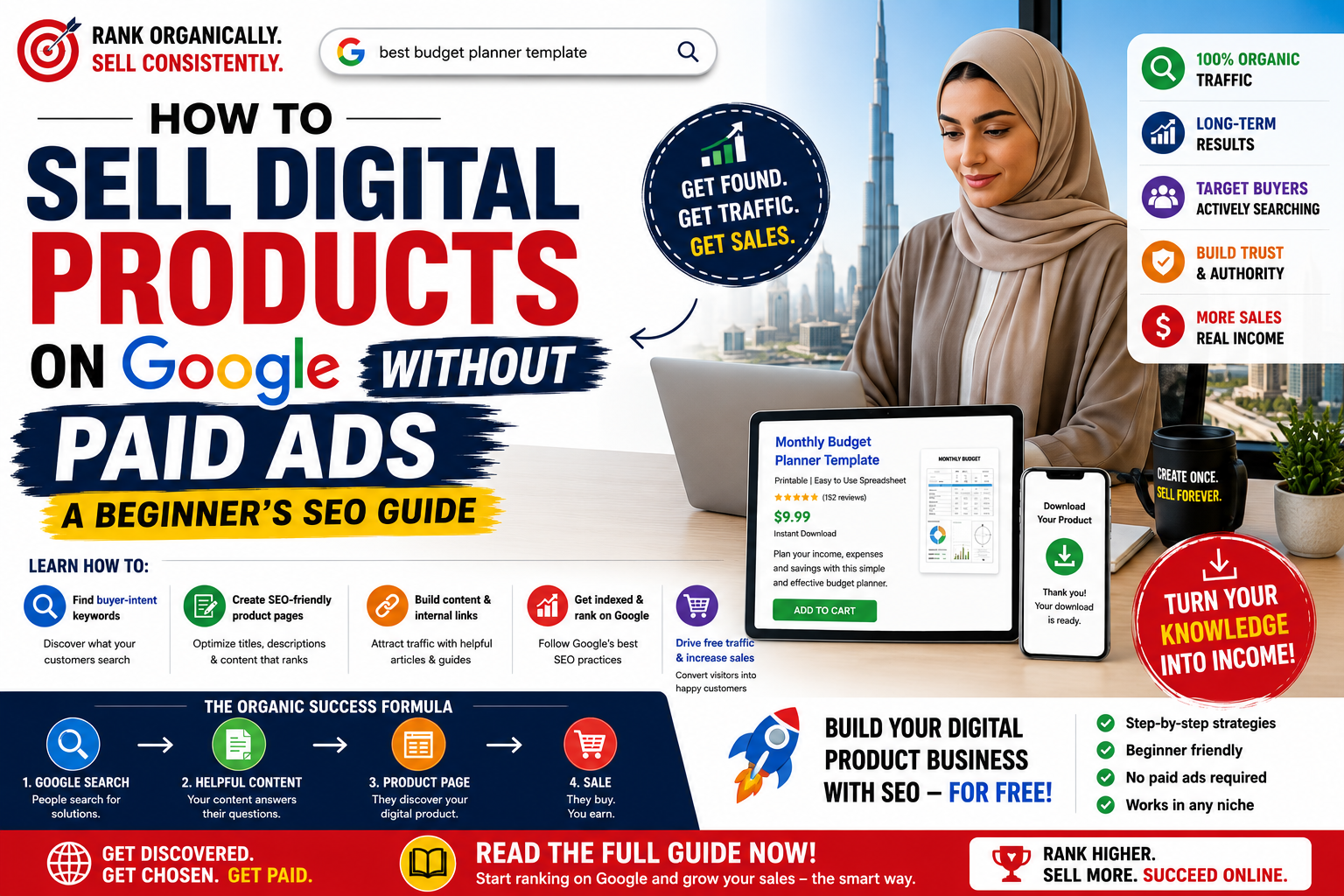
Learn how to sell digital products on Google without paid ads
By Super Admin
Get the updates, on newly released, popular & fast-moving MRR digital products
Up to Top
Comments All
Michael
@michael
The idea of having other people help promote your digital product is something I hadn’t really thought about before. I liked how simply you explained it because it made affiliate marketing feel much easier to understand. I’m definitely taking a few ideas from this one! 😊
September 07,2026 At 09:22 PM
Jesse
@jesse
The affiliate marketing approach made me think differently about selling digital products. Instead of relying only on my own audience, I could partner with people who already have one and give them a commission for bringing customers. That creates a practical way to reach more buyers without handling all the promotion myself.
August 26,2026 At 11:00 PM