

Have you written an eBook but do not know how to start selling it online?
You are not alone.
Many people create valuable eBooks, guides, manuals, planners, or educational PDFs but struggle to turn them into income. Some do not know which selling platform to use. Others believe they need an expensive website, technical skills, paid advertising, or a large social-media following.
The good news is that selling an eBook online can be much simpler than it appears.
You can create your eBook, upload it to a digital marketplace, set a price, share the product link, and allow customers to purchase and download it online. Platforms such as Vezill make this process easier by providing a marketplace where creators can upload and sell digital products without building a complicated e-commerce website.
This guide explains how to sell your eBook online step by step, how to attract customers, and why hosting your eBook on Vezill for free can be one of the best options for a beginner.
An eBook is a book, guide, manual, workbook, planner, report, or educational resource that is delivered electronically.
It can be read using:
· A smartphone
· A tablet
· A laptop
· A desktop computer
· An e-reader
Common eBook formats include PDF, EPUB and MOBI. However, PDF is often the easiest format for independent creators because it preserves the design and can be opened on most devices.
Examples of eBooks you can sell include:
· Business guides
· Recipe books
· Study guides
· Health and wellness guides
· Career manuals
· Financial planners
· Relationship guides
· Fitness plans
· Marketing guides
· Religious and devotional books
· AI and technology tutorials
· Personal-development books
You do not have to be a famous author to sell an eBook. You simply need to organize useful information that helps a specific group of people solve a problem or achieve a desired result.
Yes, you can make money selling eBooks when your product addresses a genuine need and is marketed to the right audience.
Unlike physical books, eBooks do not require printing, warehousing or shipping. Once the original file has been created, it can be sold repeatedly without producing a new copy for every customer.
This gives eBooks several advantages:
· Low startup costs
· High potential profit margins
· Instant delivery
· Global reach
· No physical inventory
· Easy updates
· Automated online sales
· Unlimited reproduction
For example, suppose you create an eBook and sell it for $10. If 100 people buy it, the product generates $1,000 in gross sales. If you sell 1,000 copies, it generates $10,000.
The file does not have to be recreated after every purchase.
However, success is not automatic. Your eBook must solve a meaningful problem, appear professional and be supported by a consistent marketing strategy.
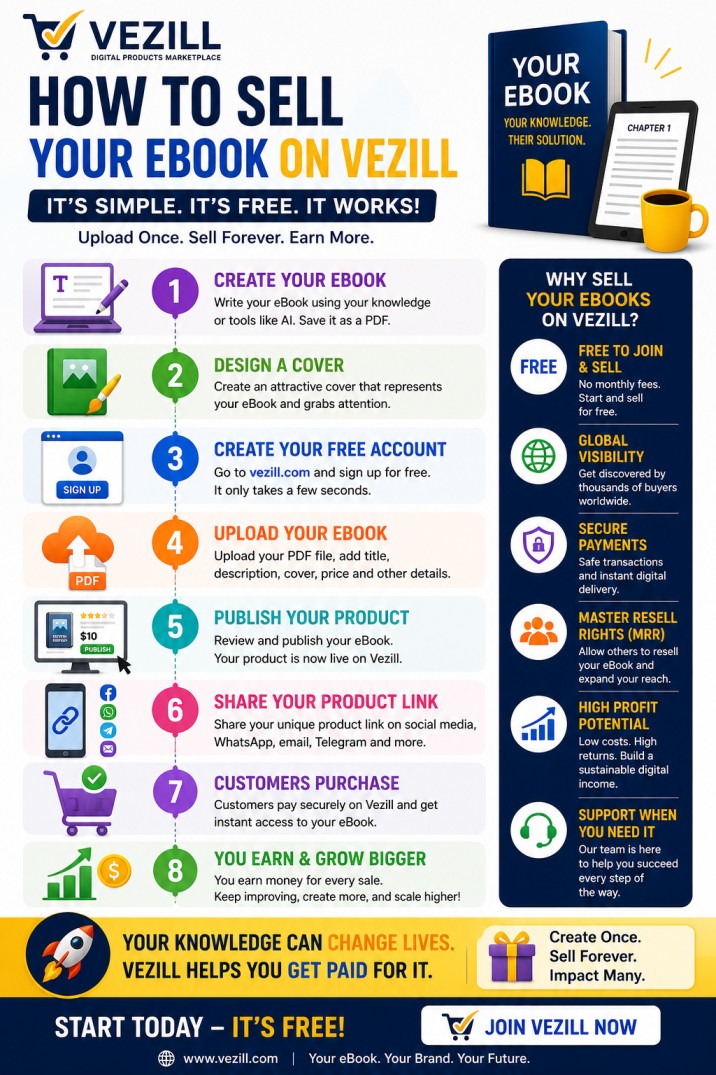
Writing an eBook is only one part of the process. You also need to package, position, publish and promote it effectively.
Here are some of the most common challenges eBook creators face.
A creator may write about a subject they personally enjoy without confirming whether customers are actively searching for it.
A profitable eBook normally addresses an existing question, frustration, fear, goal or urgent need.
A vague title does not clearly explain the value of the product.
For example, a title such as “Better Finances” is less persuasive than:
“The 30-Day Personal Budgeting Guide: How to Control Your Spending, Clear Debt and Start Saving.”
The second title identifies the subject, expected outcome and structure.
Potential customers often see the cover before they read the product description.
An unattractive or confusing cover can make a valuable eBook appear unprofessional.
Uploading an eBook does not guarantee that people will discover it.
You must actively promote it through social media, search engines, email, communities, partnerships, content marketing or direct outreach.
Some e-commerce solutions require web development, hosting, payment integrations, plugins, maintenance and monthly subscriptions.
This can discourage beginners who simply need a straightforward place to upload and sell their digital products.
You only need a few basic items to begin.
Your content should be useful, properly organized and carefully edited.
PDF is usually appropriate for guides, planners, workbooks, manuals and visually formatted eBooks.
EPUB may be more suitable for books intended for traditional e-readers.
The cover should include:
· A clear title
· A compelling subtitle
· The author or brand name
· Relevant imagery
· Easy-to-read typography
Your description should explain:
· Who the eBook is for
· What problem it solves
· What the reader will learn
· What is included
· Why the product is valuable
Your price should reflect the usefulness, depth and intended audience of the product.
You need a platform that can host the digital file, display the product and help manage the customer-purchase process.
This is where Vezill becomes useful.
Vezill is a digital-products marketplace where creators and resellers can participate in the digital economy. It supports digital formats such as PDFs, videos and audio products and also incorporates Master Resell Rights and Private Label Rights opportunities.
Instead of building a complete e-commerce website from scratch, a creator can use Vezill to present and sell an eBook through an existing digital marketplace.
Here are the main reasons it can be a strong option for beginners.
Creating an independent online store can involve:
· Buying a domain
· Paying for web hosting
· Designing the website
· Installing e-commerce software
· Integrating payment systems
· Configuring product downloads
· Maintaining security
· Resolving technical problems
Vezill reduces this barrier by giving creators a platform where digital products can be listed.
You can concentrate on improving and marketing your eBook instead of becoming a web developer.
Paying monthly website-hosting and e-commerce costs can be risky when you have not yet made your first sale.
Hosting your eBook on Vezill allows you to begin without committing to the cost of developing and maintaining an independent online shop.
That makes it particularly attractive to:
· First-time authors
· Students
· Freelancers
· Teachers
· Coaches
· Content creators
· Small businesses
· People starting with limited capital
Reducing your initial expenses gives you more freedom to test your eBook idea before investing heavily.
A general website builder can sell many types of products, but it may require additional configuration to handle downloadable files.
Vezill is focused on digital products and supports content such as PDFs, video, audio and other downloadable resources.
This makes it suitable for:
· eBooks
· Courses
· Templates
· Checklists
· Workbooks
· Planners
· Audio products
· Video tutorials
· Software and applications
Creators can upload original digital products and turn their knowledge into an income-generating asset.
You maintain responsibility for the quality, legality and accuracy of your content while using the platform to make it available to customers.
Master Resell Rights, commonly called MRR, allow customers to resell an eligible digital product under the terms of its licence.
This is different from an ordinary personal-use eBook.
With a normal eBook licence, a customer buys the product to read or use personally. With MRR, the customer may also receive permission to resell the product.
Vezill is built around digital-product selling and reselling and promotes MRR products as part of its marketplace model.
This can help creators build a wider distribution network because customers have an additional financial reason to promote eligible products.
However, creators should clearly state the licence conditions and only offer resell rights for products they own or are legally authorized to distribute.
Selling through a marketplace can provide an advantage over hosting a hidden file on a personal webpage.
People who visit a digital marketplace are already interested in digital products. This can create additional discovery opportunities for sellers, although every creator should still promote their own product actively.
On Vezill, a person can potentially operate as:
· A product creator
· An eBook author
· A digital-product seller
· An MRR reseller
· A digital-products trader
· A content entrepreneur
This means you can begin by selling one eBook and later expand into bundles, courses, templates, videos and other downloadable products.
The following process can take you from a finished manuscript to a market-ready digital product.
Before uploading your eBook, define its primary purpose.
Ask yourself:
· Who needs this information?
· What problem is the person facing?
· What outcome does the reader want?
· Why would the reader pay for this solution?
· What makes my guide easier or more useful than free information?
For example, do not simply say your eBook is about job hunting.
Be more specific:
This guide helps recent graduates prepare professional CVs, identify legitimate vacancies and perform confidently during interviews.
A clear problem makes marketing easier.
Avoid trying to sell to everyone.
Your ideal customer might be:
· A university student
· A job seeker
· A new parent
· A small-business owner
· An aspiring freelancer
· A teacher
· A fitness beginner
· A content creator
· A Christian seeking a stronger prayer life
· A person managing household finances
The more clearly you understand the reader, the easier it becomes to choose the title, price, design and marketing message.
Validation means confirming that people care about the subject before investing heavily in it.
You can validate an eBook idea by:
· Checking Google search suggestions
· Asking questions in relevant Facebook groups
· Studying discussions on Reddit and Quora
· Reading comments on YouTube and TikTok
· Reviewing competing books
· Asking your existing audience
· Using Google Trends
· Asking AI tools to identify common customer questions
Competition does not always mean that a market is overcrowded. It can also indicate that customers are willing to pay for solutions in that category.
Your goal is not necessarily to invent a completely new subject. It is to provide a clearer, more practical or more relevant solution.
Your eBook should have a logical structure.
A practical structure may include:
1. Title page
2. Copyright notice
3. Disclaimer where necessary
4. Table of contents
5. Introduction
6. Main chapters
7. Practical exercises or action steps
8. Summary
9. Additional resources
10. About the author
11. Call to action
Proofread the content carefully.
Check for:
· Spelling mistakes
· Grammar problems
· Repeated information
· Unsupported claims
· Broken links
· Poor formatting
· Inconsistent headings
· Copyright violations
AI can help you draft and edit, but you should review the final content personally. Do not publish unverified AI-generated information, particularly in health, finance, legal or technical subjects.
A good eBook should be easy to read on both mobile phones and computers.
Use:
· Clear headings
· Short paragraphs
· Adequate spacing
· Readable fonts
· Page numbers
· Consistent margins
· High-quality images
· Bullet points where useful
· A clickable table of contents where possible
Avoid overcrowding each page with too much text.
You can format your eBook using:
· Microsoft Word
· Google Docs
· Canva
· Adobe InDesign
· Affinity Publisher
· LibreOffice
Export the final version as a PDF unless another format is required.
Open the exported file and inspect every page before uploading it.
Your cover should communicate the subject within seconds.
A strong cover normally contains:
· A short, readable title
· A benefit-driven subtitle
· One main visual concept
· Professional typography
· The author or business name
For example:
Title: How to Sell eBooks Online
Subtitle: A Beginner’s Step-by-Step Guide to Creating, Publishing and Marketing Profitable Digital Books
Do not place too many words or unrelated images on the cover.
A simple, professional design is usually more effective than a crowded one.
Visit Vezill and complete the registration process.
Use accurate information and choose a professional username or business identity that customers can trust.
After registration:
· Complete your profile
· Add a suitable profile image or logo
· Write a brief professional description
· Review the platform’s current seller terms
· Familiarize yourself with the dashboard
A complete profile helps establish credibility.
Before creating the listing, prepare the following:
· Product title
· Short description
· Full product description
· Cover image
· eBook file
· Price
· Category
· Relevant search tags
· Licence terms
· Author or creator details
Preparing these elements in advance makes the upload process faster.
Access the product-upload or seller section of your account.
Enter the product information and upload the final eBook file.
Make sure you upload:
· The correct PDF
· The final edited version
· A high-resolution cover
· Any promised bonuses
· The appropriate licence document where relevant
Do not upload copyrighted material that belongs to someone else unless you have clear authorization to sell it.
A product description should not only summarize the chapters. It should persuade the right customer that the eBook is relevant to their needs.
Use this structure:
Describe the frustration or goal your reader already recognizes.
Explain how the eBook helps the reader move from the current problem toward the desired outcome.
Mention the main chapters, templates, checklists, routines or bonuses.
State exactly who should purchase the eBook.
Focus on what the reader will understand, achieve, avoid or improve.
Encourage the reader to purchase and start applying the information.
Are you struggling to create and sell your first digital product? This practical guide takes you through the complete process of choosing a profitable idea, creating an eBook using AI, designing a professional cover, setting the right price and marketing it online. It is suitable for beginners, students, freelancers, coaches and aspiring digital entrepreneurs.
Avoid unrealistic promises such as guaranteed income or instant wealth.
There is no single correct price for every eBook.
Consider:
· The urgency of the problem
· The depth of the content
· The purchasing power of the audience
· The price of competing products
· The number of templates or bonuses included
· Whether resell rights are provided
· The expected benefit to the reader
A short introductory guide may be priced lower than a comprehensive professional manual containing templates, worksheets and commercial-use rights.
Do not assume that the lowest price will produce the highest sales.
A very low price can sometimes make customers question the product’s quality. Focus on value rather than competing only through discounts.
You must clearly define what the buyer is allowed to do with the eBook.
The customer can read and use the product but cannot resell, copy or redistribute it.
The customer may use certain elements for business purposes under defined conditions.
The buyer may be allowed to modify, rebrand or republish the product depending on the licence terms.
The buyer can resell the product and may be permitted to transfer specified resale rights to subsequent buyers.
Do not select MRR simply because it sounds attractive. Use it only when it fits your business model and you fully own the content and resale permissions.
Include a written licence document to prevent confusion.
Before promoting the link, inspect the published page.
Check:
· The title
· Cover quality
· Description
· Price
· File
· Category
· Contact information
· Licence details
· Spelling
· Mobile appearance
Where practical, test the customer journey to understand what buyers will experience.
Fix any errors before launching your marketing campaign.
Once your eBook is published, use its product link in your marketing.
Share it through:
· TikTok
· YouTube
· Telegram
· Blog articles
· Online communities
· Influencer partnerships
Do not post the link repeatedly without context.
Explain what the product solves and why the audience should care.
Hosting gives your eBook a place to be purchased, but marketing brings potential customers to the listing.
Here are practical ways to attract buyers.
Share useful tips connected to your eBook.
For example, an author selling a budgeting guide could create posts about:
· Common budgeting mistakes
· How to reduce unnecessary expenses
· Simple saving methods
· Signs of poor money management
· How to prepare an emergency fund
At the end of the post, direct interested readers to the complete guide.
Useful content builds trust before asking for a sale.
Create short videos that answer one question at a time.
A simple format is:
1. Start with the problem.
2. Explain one helpful idea.
3. Introduce the eBook.
4. Provide a call to action.
Example:
Are you earning money but still struggling to save? The problem may not be your income—it may be the absence of a clear spending plan. Start by recording every expense for seven days. For the complete budgeting system, access my eBook through the link.
You do not need expensive equipment. A smartphone, good lighting and clear audio can be enough.
WhatsApp can be effective when used respectfully.
You can promote through:
· Status updates
· Customer groups
· Broadcast lists
· Direct conversations
· Community groups where promotion is allowed
Instead of writing “Buy my eBook,” explain the benefit.
Example:
I have created a practical guide for beginners who want to start selling digital products but do not know where to begin. It covers idea selection, AI-assisted creation, pricing, product hosting and marketing. Access it here: [product link]
Do not send unsolicited messages repeatedly.
An email list gives you direct access to people who have shown interest in your subject.
Offer a useful free resource such as:
· A checklist
· A sample chapter
· A short planner
· A template
· A mini-guide
You can then send educational emails and introduce the full eBook.
Email marketing is especially valuable when you plan to sell additional products later.
Create articles targeting questions your potential customers search for.
For example, when selling an eBook about creating digital products, publish articles such as:
· How to Create an eBook Using AI
· Best Digital Products to Sell Online
· How to Validate a Digital Product Idea
· How to Make Your First Digital-Product Sale
· Best Platforms for Selling eBooks
Answer the question thoroughly, then link naturally to your eBook.
This can help you attract people through Google and AI-powered search tools.
Find content creators whose audiences match your target customer.
Do not select influencers based only on follower count. Evaluate:
· Audience relevance
· Engagement quality
· Trust
· Content style
· Location
· Previous promotions
· Conversion potential
A small creator with a highly relevant audience may generate better results than a celebrity with unrelated followers.
Customer feedback can reduce uncertainty.
Ask genuine buyers to comment on:
· What problem they had
· What they learned
· Which section helped them
· What changed after applying the guide
Never create fake testimonials or purchase misleading reviews.
You can increase perceived value by combining your eBook with complementary resources.
For example:
eBook Business Starter Bundle
· Main eBook
· Topic-validation worksheet
· eBook outline template
· Product-description template
· Social-media content calendar
· Pricing calculator
A bundle may justify a higher price and give the customer a more complete solution.
MRR can turn some customers into independent resellers.
Instead of relying only on your own marketing, you can allow eligible buyers to promote and resell the product under a clearly written licence.
Vezill’s marketplace model includes digital products with Master Resell Rights and a reseller structure.
This can expand distribution, but it must be managed carefully.
Maintain quality standards, protect your brand and define:
· Minimum or recommended resale prices
· Whether the product can be modified
· Whether resellers can transfer rights
· Which marketing claims are prohibited
· Whether bonuses may be added
· Whether the author name must remain
Your first version does not need to be perfect, but it should be accurate, useful and professional.
Do not copy text, images, designs or ideas in ways that violate copyright.
AI can produce factual errors, repetition and generic advice. Human review remains necessary.
“Everyone” is not a practical target market. Identify one primary audience first.
Make the topic and result immediately understandable.
Do not only list chapters. Explain how the product helps the customer.
A marketplace gives your eBook a place to sell, but creators still need to bring attention to their listings.
Avoid claims such as guaranteed income, guaranteed healing or guaranteed success.
Use legitimate customer questions and reviews to improve future editions.
Always provide written licensing conditions.
Your initial launch is only the beginning.
After publishing, monitor:
· Which marketing channel brings visitors
· Which posts generate enquiries
· What questions buyers ask
· Which objections prevent purchases
· Which price converts best
· Whether the cover attracts attention
· Whether customers understand the product description
Use this information to improve the listing.
You can also create:
· A revised edition
· A workbook
· A video course
· An audiobook
· A premium bundle
· A related eBook
· A coaching service
· A membership product
One successful eBook can become the foundation of a wider digital-products business.
The best platform depends on your goals, audience and business model.
Amazon KDP can be useful for reaching readers in Amazon’s book ecosystem. A private website can provide greater control but normally requires more setup, technical management and ongoing costs. General digital-download platforms may offer simple storefront tools but differ in payment options, fees, marketplace exposure and licensing features.
Vezill is particularly suitable for creators who want to:
· Start without building a complex website
· Host digital products without a major initial investment
· Sell PDFs and other digital formats
· Participate in a digital-products marketplace
· Offer eligible products with Master Resell Rights
· Expand from eBooks into courses, audio, video and templates
· Build a creator-and-reseller digital business
The platform presents itself as a marketplace for buying, selling and reselling digital products, with a strong focus on Master Resell Rights.
For a beginner, the greatest advantage is simplicity.
You can focus on the four activities that matter most:
1. Create a useful eBook.
2. Upload and host it.
3. Share the product link.
4. Build a repeatable marketing system.
Create and format the eBook, design a professional cover, choose a digital-products platform, upload the file, write a persuasive description, set a price, publish the listing and promote its purchase link.
No. You can use a digital-products marketplace such as Vezill instead of developing a separate e-commerce website.
Selling means charging customers, but you can reduce your startup expenses by using a platform that allows you to host or list your eBook without paying for a separate website.
PDF is often the simplest format for independent guides, workbooks and manuals. EPUB is more suitable for flexible text displayed on e-readers.
The price depends on the product’s depth, audience, problem, competition, bonuses and licence. Focus on the value delivered rather than choosing a price randomly.
AI can assist with research, outlining, drafting and editing. However, the creator must review the content, verify its accuracy, respect copyright and add meaningful original value.
Yes. A digital eBook can generally be sold repeatedly, provided you own the necessary rights.
Only when you explicitly provide a licence such as Master Resell Rights and have the legal authority to grant those rights.
On a digital-product platform, customers typically complete the purchase and obtain access to the downloadable file through the platform’s delivery process.
Start with people who already know or follow you. Share educational content, explain the specific problem your eBook solves and invite interested people to view the product page.
Yes. Alternatives include blogging, search-engine optimization, email marketing, partnerships, affiliates, online communities, webinars and direct referrals.
Possible causes include weak demand, an unclear title, poor cover design, low trust, unsuitable pricing, a weak description or insufficient promotion.
Use clear copyright notices, licence terms, controlled file delivery and watermarking where appropriate. No method can prevent all unauthorized copying, but these steps establish ownership and discourage misuse.
It can become partially automated, but creating the product, generating traffic, supporting customers and updating content still require work.
You do not need an expensive website, a publishing contract or thousands of followers to start selling an eBook.
You need:
· A useful product
· A clearly defined audience
· A professional presentation
· A reliable place to host it
· A consistent marketing strategy
Vezill provides a practical starting point for creators who want to enter the digital-products business without dealing with the cost and complexity of building an online shop from scratch.
You can upload your eBook, create a product listing, share its link and begin building your audience. You can also explore Master Resell Rights when you want other digital-product traders to participate in distributing eligible products.
Do not wait until everything feels perfect.
Complete your eBook, review it carefully, create your Vezill account and publish your first digital product.
Turn your knowledge, skills or experience into a digital product that can be purchased online.
Create your Vezill account, upload your eBook and take the first practical step toward building your digital business today.
Discover more articles you might be interested in

Digital Products Market 2026–2030: Is It Worth Investing In? Global Data, Trends & Opportunities

By Super Admin
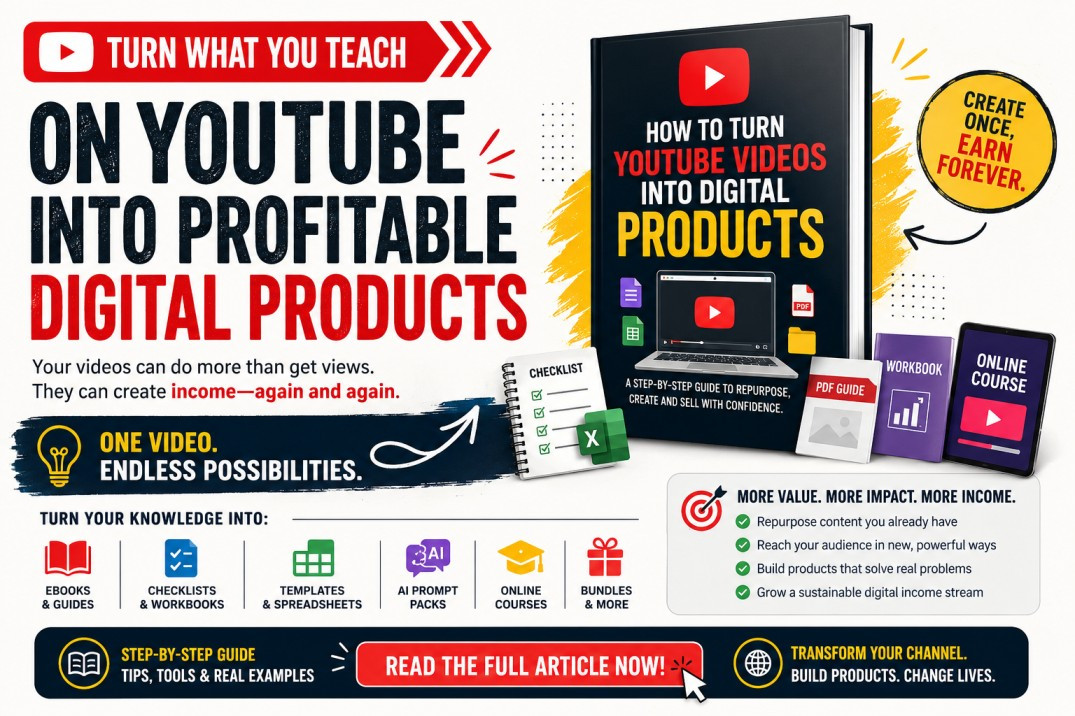
Learn how to turn your YouTube videos into profitable digital products such as ebooks, courses, guides, templates, checklists and prompt packs using AI.
By Super Admin
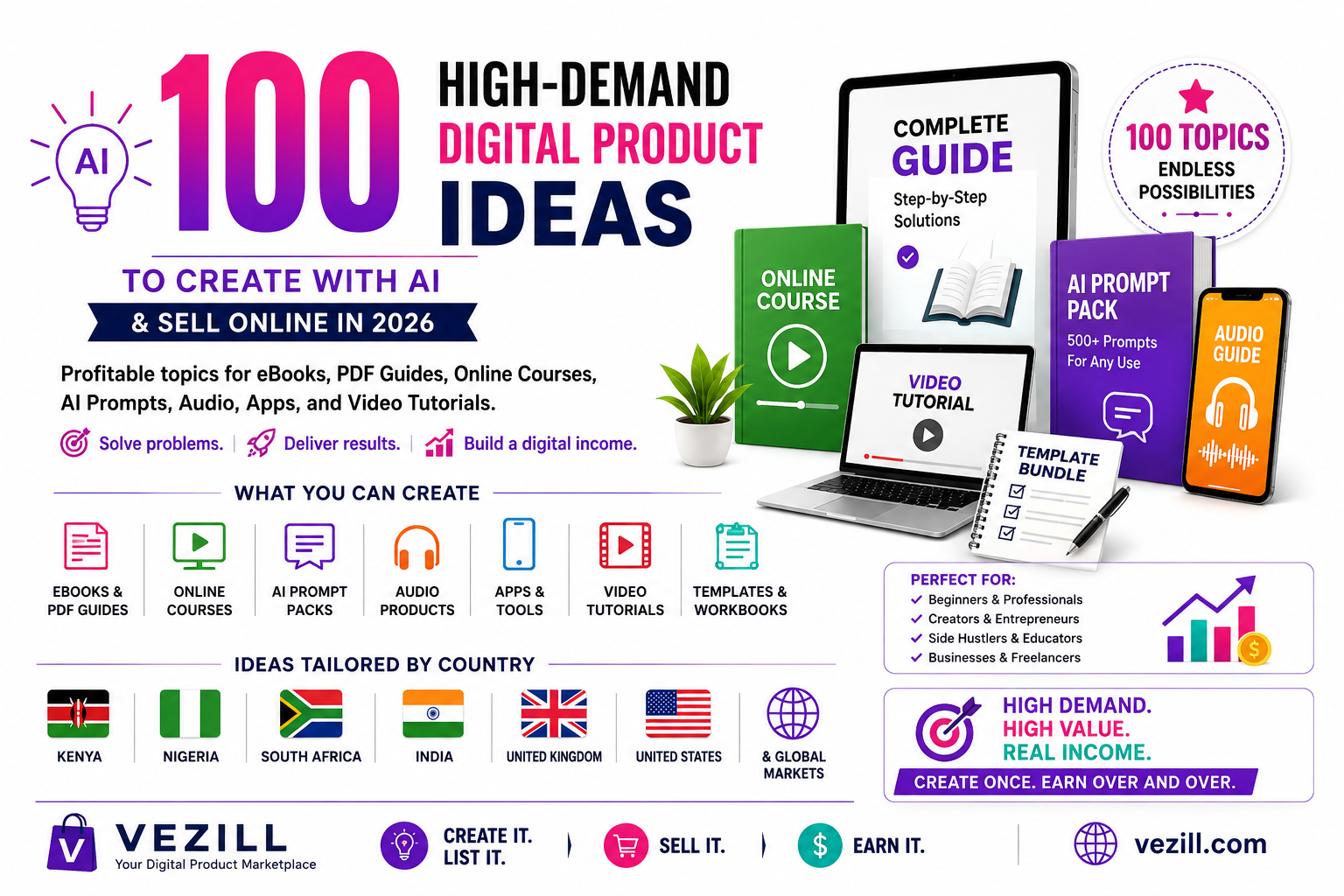
Discover 100 high-demand digital product topics for ebooks, PDF guides, online courses, AI prompt packs, apps, audio products and video tutorials.
By Super Admin
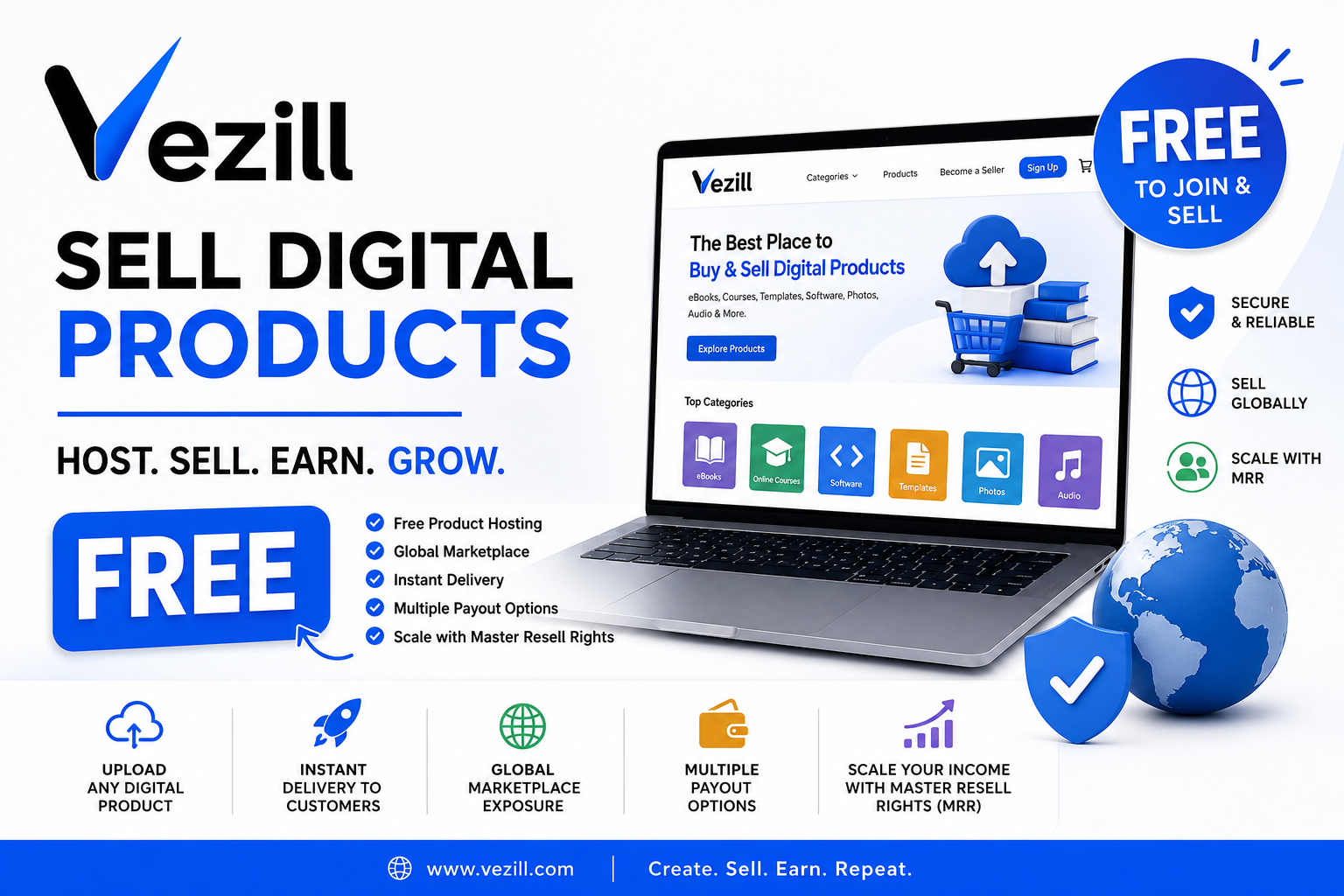
Discover why Vezill is one of the best free platforms to host and sell digital products worldwide
By Super Admin
Get the updates, on newly released, popular & fast-moving MRR digital products
Up to Top